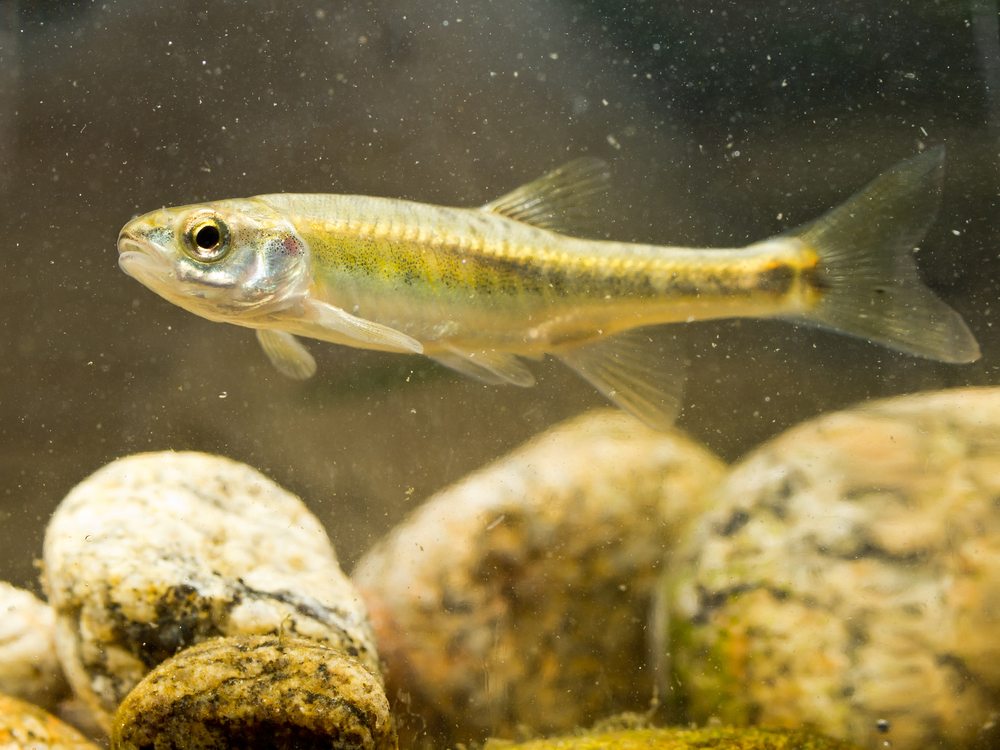
Minnow

Phoxinus phoxinus

available for sale


Minnow profile

Home: All of Europe, parts of North and West Asia

Synonyms: minnow, minnow, minnow, Phoxinus laevis (older name), common minnow, rainbow minnow, gold minnow

First introduction: Known for many decades as a cold-water fish in aquariums and garden ponds.

Size: 6–10 cm, rarely up to 12 cm

Sexual differences: Males show more intense colours at spawning time Males develop spawning rash (white dots) on the head and gill covers. Females are fuller and larger

Diet: Omnivorous, prefers animal food. Flake food is accepted. Fresh and frozen food: mosquito larvae, daphnia, artemia. Small live food is very popular. Also eats algae deposits and fine plant debris

Temperature: 8–20 °C (cool keeping necessary!)

Tank size: From 200 litres upwards, larger is better Cold-water aquariums or ponds are ideal - check well depending on the subspecies.

Water values:  pH: 6.5–8.0 / GH: 5–15 °dGH

Product information "Minnow"

Minnow profile


Area of origin:

The minnow is native to clear, cool streams, rivers and lakes in Europe. It prefers oxygen-rich, gently flowing water.


Species:

In Central Europe mainly Phoxinus phoxinus, although there are several closely related species (e.g. Phoxinus septimaniae, Phoxinus ketmaieri).

The species frequently offered in pet shops include

  • Minnow (Phoxinus phoxinus)
  • Rainbow minnow (Notropis chrosomus)
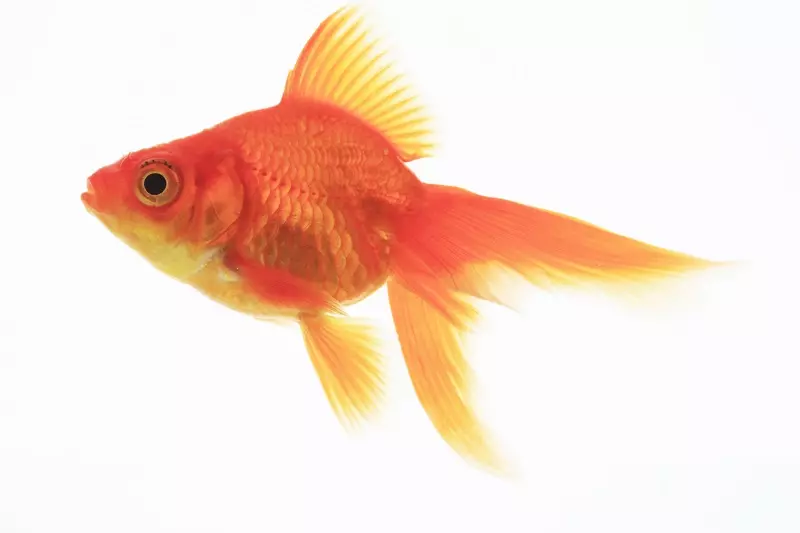
  • Gold minnow (Pimephales promelas 'Gold')


Social behaviour:

Minnows are peaceful, lively schooling fish. They form close shoals. Very active, swim a lot. Ideal for near-natural cold-water tanks. Good compatibility with gudgeons, bitterlings and whitefish.


Keeping conditions:

  • Clear, cool, oxygen-rich water
  • Light to medium current
  • Gravel or sand bottom
  • Well-planted or structurally varied tank edges
  • No heating necessary
  • Regular water changes are important


Breeding:

Breeding in an aquarium is possible, but demanding. Spawning time in spring. Eggs are spread over gravel or aquatic plants. High oxygen levels and spring conditions (temperature drop, current) encourage spawning. Parents must be removed after spawning.


Special features:

  • Ideal for cold-water aquariums or small ponds
  • Very fond of swimming, needs a lot of space
  • Robust fish species, but sensitive to warm water
  • Beautiful spawning colours in males (reddish fins, dark body)


Conclusion:

The minnow is an attractive, lively and very natural schooling fish for cold-water ponds. It displays harmonious behaviour in shoals, is robust and is ideal for near-natural aquaria or ponds - provided the water remains cool and oxygen-rich.


If you have any questions or problems, our trained team at Zoo Roco is here to help. They can provide expert advice on all matters.

Composition
Feeding recommendation
Technical details
Size information

0 of 0 reviews

Give us a rating!

Share your experience with the product with other customers.


Suggested products

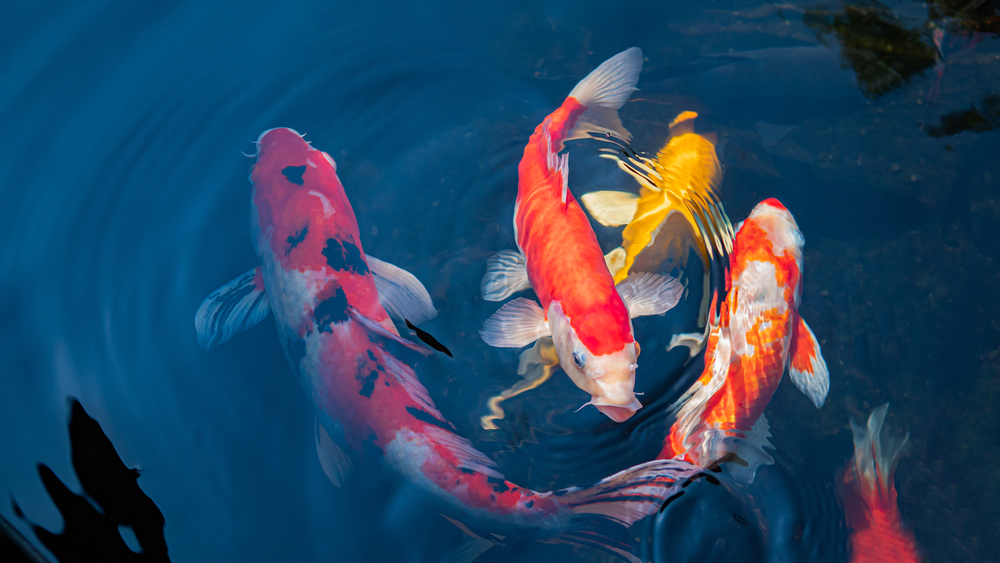
Koi
KoiArea of origin:Koi originally come from the Asian Amur carp, which is common in China, Japan and other parts of East Asia. In Japan, they were further developed into colourful cultivated forms.Species:Koi are not a separate species, but are cultivated forms of carp. The species frequently offered in pet shops include (breeding varieties)KohakuSankeShowaOgonChagoiAsagiShusuiUtsuriBekkoTanchoSocial Behaviour:Koi are peaceful, curious and sociable fish. They like to live in groups, are very trusting and often tame. Aggressive behaviour is rare.Keeping conditions:A large, deep pond with a powerful filter system is essential. Plenty of oxygen, regular water changes and good hygiene are crucial. Plants, shaded areas and high-quality feeding contribute to good health.Minimum depth: 1.3-1.5 m, deeper for overwintering.Breeding:Koi spawn in spring. Females lay large quantities of eggs on plants or spawning brushes. Breeding is demanding, as koi can eat spawn and young fish. Selective breeding is common and time-consuming.Special features:Very long life (20-40 years, some over 60 years). Intense colours only with good care and high-quality food. Requires a lot of space and a strong filter. Very trusting - often the "dogs of the garden pond".Conclusion:Koi are impressively beautiful, long-lived and peaceful pond fish, but they place high demands on space, water quality and care. With a well-filtered, spacious pond and a balanced diet, they are a fascinating addition to any garden pond.If you have any questions or encounter any problems, our trained team at Zoo Roco is here to help. They can provide expert advice on all matters.
 
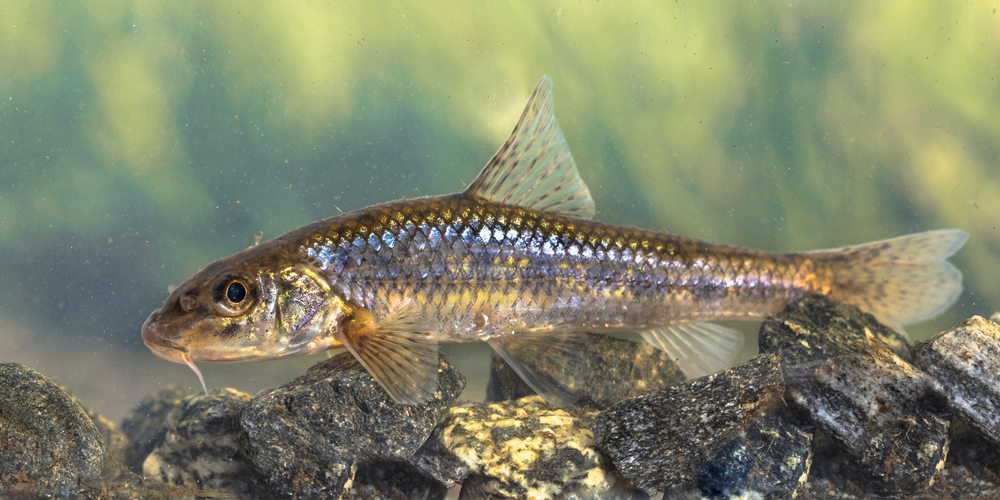
Gudgeon
Gudgeon profileArea of origin:The gudgeon is found in almost all of Europe, with the exception of the southernmost countries. It lives in clear, cool, oxygen-rich waters with a gravel or sandy bottom.Species:The gudgeon itself (Gobio gobio) is the most common species. However, there are many related species within the genus Gobio - but these are very rare in the trade. The species frequently offered in the pet trade includeEuropean gudgeon (Gobio gobio)Gobio species (e.g. Gobio obtusirostris) are much rarerSocial behaviour:The gudgeon is peaceful, sociable and very active on the bottom. It is suitable for cold-water pools/garden ponds with other calm species such as minnows, bitterlings and damselflies. It loves group behaviour and has a calm, inquisitive nature.Keeping conditions:High oxygen contentFiltering with a gentle current Sand or gravel bottom for burrowingLarger tanks with lots of hiding places (stones, roots)Cold water keeping, therefore no heating requiredRegular water changes are importantBreeding:Breeding in the aquarium is difficult: Spawning time in spring. Eggs are laid on gravel. High current and oxygen required. More successful in ponds than in aquaria.Special features:Very robust with good water quality. Requires cool, oxygen-rich water - not a tropical fish. Actively burrows at the bottom, so a fine substrate is important. Excellent for cold-water aquaria and near-natural tanksConclusion:The gudgeon is a peaceful, natural and extremely interesting bottom fish for cold-water tanks or ponds. With its liveliness and group dynamics, it brings movement into the aquarium. It requires clean, cool water, a current and sufficient space. Then it is a long-lived and fascinating fish to keep.If you have any questions or problems, our trained team at Zoo Roco is here to help. They can provide expert advice on all matters.
 
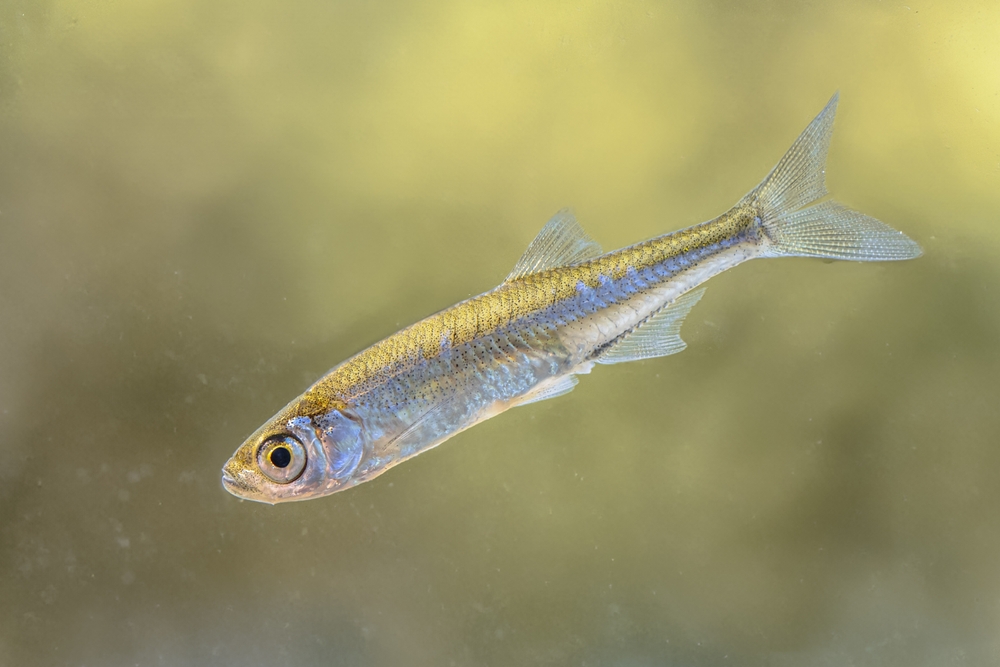
Moderlieschen
Profile of the ModerlieschenArea of origin:Common in Europe from France to Russia; prefers stagnant or slow-flowing waters such as ponds, lakes, ditches and calm river sections. Avoids strong currents and very warm water.Species:The Moderlieschen is an independent species of the genus Leucaspius. Other close relatives: Pseudophoxinus species Phoxinus phoxinus (minnow; not identical, but ecologically similar) The species frequently offered in the pet trade include:Moderlieschen (Leucaspius delineatus)Other related small species are very rare in the trade.Social behaviourVery peaceful Forms compact shoals. Very keen swimmers. Ideal for community with other cold-water species such as minnows, bitterlings or gudgeons. Lively in the pond, but not disruptiveKeeping conditionsLarge swimming zones required.  Well-filtered, cool tanks.  Oxygen-rich water.  Plants, reeds and shelters desirable.  No heating necessary.  Very robust, but sensitive to temperatures above 24 °CBreedingDifficult in the aquarium, easier in the pond.  Spawning period: May to July.  Sticky eggs are attached to plants and roots.  Males guard the brood (rare brood care among cyprinids!) Fry require fine powdered food and later Artemia nauplii.  Water quality and temperature profiles similar to those found in nature promote breeding successSpecial featuresTypical, small native schooling fish.  Extremely robust when kept cool.  Perfect for near-natural cold-water aquariums or garden ponds.  Tolerates a wide spectrum of water values.  Prone to jumping → ensure cover or pond edge is consideredConclusionThe Moderlieschen is an active, peaceful and extremely resilient cold water fish that is excellently suited for ponds and cool aquariums. In shoals it displays lively, harmonious behaviour and thanks to its adaptability is ideal for anyone wanting to maintain a native tank or biotope aquarium.If you have any questions or problems, our trained team at Zoo Roco is available to assist you. They can provide you with expert advice on all matters.
 
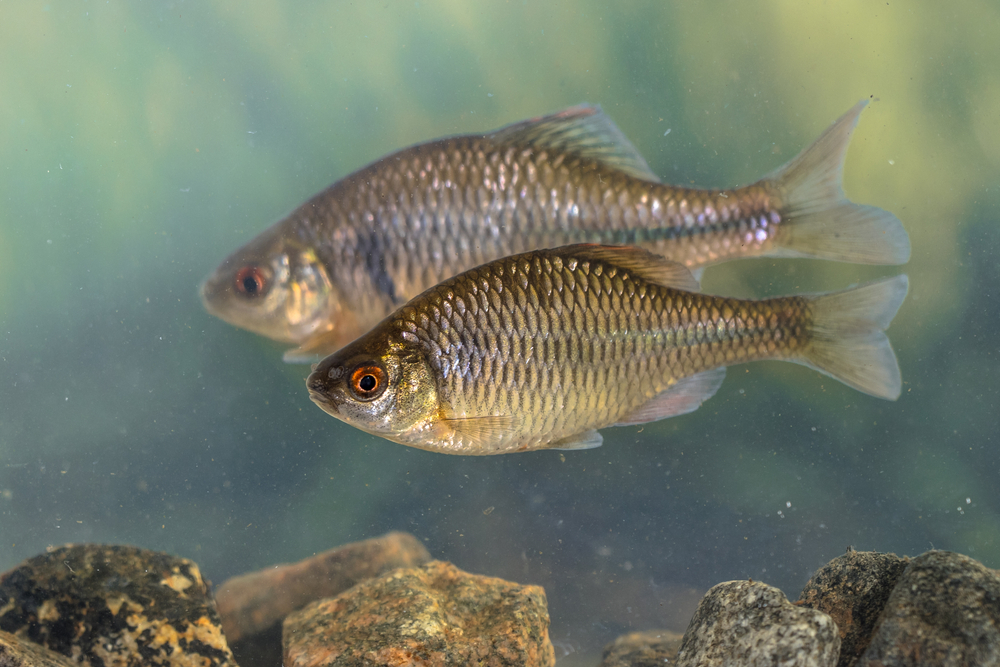
Bitterling
Bitterling profileArea of origin:The bitterling is found in central, eastern and southern Europe and parts of western Asia. It prefers plant-rich waters with pond mussels.Species:The commercially available bitterling is usually the species Rhodeus sericeus amarus or today's nomenclature Rhodeus amarus. The species frequently offered in the pet trade includeEuropean bitterling (Rhodeus amarus)Less common:Japanese bitterling (Rhodeus ocellatus)Chinese bitterling (Rhodeus sinensis)Social behaviour:The bitterling is peaceful, lively and well suited to community aquaria with similarly calm species. It displays interesting group and mating behaviour. Important: Live mussels are required for natural reproduction (e.g. pond mussels).Keeping conditions:Well-planted aquarium with lots of structure Slight current and clean, oxygen-rich water Space for free swimming Ideally mussels if breeding is to be observed Suitable for cooler temperatures - also ideal for cold water tanksBreeding:The bitterling has a unique reproductive biology: The female lays the eggs in living mussels using her ovipositor tube. The larvae develop protected in the mussel and only leave it after a few weeks. Natural breeding is not possible without mussels. Breeding is only possible in aquariums with suitable mussel species.Special features:Unique symbiosis with pond mussels. Very peaceful and well suited for community ponds. Also tolerates cooler temperatures. Colours are particularly intense in males during the spawning season. Sensitive to poor water qualityConclusion:The bitterling is a fascinating, peaceful schooling fish with an unusual method of reproduction. It is well suited to planted community aquariums, especially in cold water. Its colourfulness and behaviour make it an attractive fish to keep - provided the water quality is right and there is enough space.If you have any questions or problems, our trained team at Zoo Roco is here to help. They can provide expert advice on all matters.
 
Goldfish
The goldfish (Carassius auratus) Origin: The goldfish originally comes from China, but they are now bred all over the world. Care: Goldfish are pure freshwater fish. They live in ponds and other calm waters in which many plants grow. Many aquarists keep goldfish in an aquarium; a large aquarium should be available for them. At least 150L × 60W × 60H cm. Planting in the aquarium is rather difficult, as the goldfish nibble on the plants or pluck them out. It should also have a good pump with a current as the goldfish like to dig in the substrate and stir up a lot of dirt. Sand is best for the substrate as the goldfish sometimes swallow coarser gravel and could otherwise choke on it.The goldfish is suitable for keeping in a garden pond. The garden pond should be well structured and have a minimum depth of 100 cm for overwintering. If kept well in a pond, goldfish can reproduce very well. It is always important to know where to keep the young fish. The goldfish lives in groups. As they are purely cold-water fish, they are kept in species aquariums.There are now various breeding forms of goldfish, but also breeding forms that are not permitted. In addition, a goldfish must not be kept in a bowl – as we are led to believe in many films.These include: bubble eyes, telescope eyes or the celestial eye. There are also forms with a curved spine or with growths on the head.Among the breeding forms are the normal form or those with a veiltail. The normal form is suitable for the garden pond, the veiltail form less so as they usually cannot escape predators because they are slower swimmers. There are goldfish in various colours, the best-known colour variants are: Sarassa, Shubunkin or the Comet. Caution: Under no circumstances should you release the goldfish into public waters! Because the goldfish can survive in our areas and displace the native fish! Food: Goldfish are omnivores and feed, when kept in a garden pond, on fish food as well as mosquito larvae, water fleas, worms and aquatic plants. Occasionally you can also give them oatmeal, eggs or corn, which makes a welcome change.There are various different types of food for goldfish, whether flakes, granules or mixed food, there is something for everyone.
 

Customers also saw

Moderlieschen
Profile of the ModerlieschenArea of origin:Common in Europe from France to Russia; prefers stagnant or slow-flowing waters such as ponds, lakes, ditches and calm river sections. Avoids strong currents and very warm water.Species:The Moderlieschen is an independent species of the genus Leucaspius. Other close relatives: Pseudophoxinus species Phoxinus phoxinus (minnow; not identical, but ecologically similar) The species frequently offered in the pet trade include:Moderlieschen (Leucaspius delineatus)Other related small species are very rare in the trade.Social behaviourVery peaceful Forms compact shoals. Very keen swimmers. Ideal for community with other cold-water species such as minnows, bitterlings or gudgeons. Lively in the pond, but not disruptiveKeeping conditionsLarge swimming zones required.  Well-filtered, cool tanks.  Oxygen-rich water.  Plants, reeds and shelters desirable.  No heating necessary.  Very robust, but sensitive to temperatures above 24 °CBreedingDifficult in the aquarium, easier in the pond.  Spawning period: May to July.  Sticky eggs are attached to plants and roots.  Males guard the brood (rare brood care among cyprinids!) Fry require fine powdered food and later Artemia nauplii.  Water quality and temperature profiles similar to those found in nature promote breeding successSpecial featuresTypical, small native schooling fish.  Extremely robust when kept cool.  Perfect for near-natural cold-water aquariums or garden ponds.  Tolerates a wide spectrum of water values.  Prone to jumping → ensure cover or pond edge is consideredConclusionThe Moderlieschen is an active, peaceful and extremely resilient cold water fish that is excellently suited for ponds and cool aquariums. In shoals it displays lively, harmonious behaviour and thanks to its adaptability is ideal for anyone wanting to maintain a native tank or biotope aquarium.If you have any questions or problems, our trained team at Zoo Roco is available to assist you. They can provide you with expert advice on all matters.
 
Paludarium 30x30x60cm
Paludarium from ZooMedTerrariumwith integrated nano aquarium The Zoo Med Paludarium 30 x 30 x 60 cm is the ideal solution for anyone who wants to combine water and land areas in a high-quality terrarium. Thanks to its high design, this paludarium is perfect for tropical plants, amphibians and semi-aquatic reptiles. The robust glass finish, well-designed ventilation areas and convenient front access make it an excellent choice for both beginners and experienced keepers in Switzerland.Combined paludarium for aquatic and terrestrial animalsHigh glass design for plants, climbing animals and waterfall setupsFront doors for easy access and stress-free careHigh-quality finish made from sturdy float glass The Zoo Med Paludarium, measuring 30 x 30 x 60 cm, offers ideal conditions for natural habitats with water and land zones. The height of 60 cm allows for impressive design options with tropical plants, roots, back walls or waterfalls. The front door provides convenient access for feeding, cleaning or planting, while the top ventilation ensures reliable air circulation. The sturdy glass and neat finish stand for the long-lasting quality you would expect from Zoo Med. This paludarium is ideal for keeping small animal species and is ideal for both living spaces and professional breeding or show tanks. Suitable animal species - Small poison dart frogs (dendrobates) - Tree frogs and tree frogs - Small geckos such as Phelsuma or Lygodactylus- Crabs and other semi-aquatic invertebratesTechnology & equipmentThepaludarium can be flexibly combined with lighting, foggers or filters to create near-natural micro-habitats.Zoo Roco tip:Combine the Zoo Med Paludarium with a textured back wall, LED terrarium lighting and an automatic sprinkler system. This creates a stable microclimate and presents your animals and plants in a particularly natural way.

CHF 119.00

Bitterling
Bitterling profileArea of origin:The bitterling is found in central, eastern and southern Europe and parts of western Asia. It prefers plant-rich waters with pond mussels.Species:The commercially available bitterling is usually the species Rhodeus sericeus amarus or today's nomenclature Rhodeus amarus. The species frequently offered in the pet trade includeEuropean bitterling (Rhodeus amarus)Less common:Japanese bitterling (Rhodeus ocellatus)Chinese bitterling (Rhodeus sinensis)Social behaviour:The bitterling is peaceful, lively and well suited to community aquaria with similarly calm species. It displays interesting group and mating behaviour. Important: Live mussels are required for natural reproduction (e.g. pond mussels).Keeping conditions:Well-planted aquarium with lots of structure Slight current and clean, oxygen-rich water Space for free swimming Ideally mussels if breeding is to be observed Suitable for cooler temperatures - also ideal for cold water tanksBreeding:The bitterling has a unique reproductive biology: The female lays the eggs in living mussels using her ovipositor tube. The larvae develop protected in the mussel and only leave it after a few weeks. Natural breeding is not possible without mussels. Breeding is only possible in aquariums with suitable mussel species.Special features:Unique symbiosis with pond mussels. Very peaceful and well suited for community ponds. Also tolerates cooler temperatures. Colours are particularly intense in males during the spawning season. Sensitive to poor water qualityConclusion:The bitterling is a fascinating, peaceful schooling fish with an unusual method of reproduction. It is well suited to planted community aquariums, especially in cold water. Its colourfulness and behaviour make it an attractive fish to keep - provided the water quality is right and there is enough space.If you have any questions or problems, our trained team at Zoo Roco is here to help. They can provide expert advice on all matters.