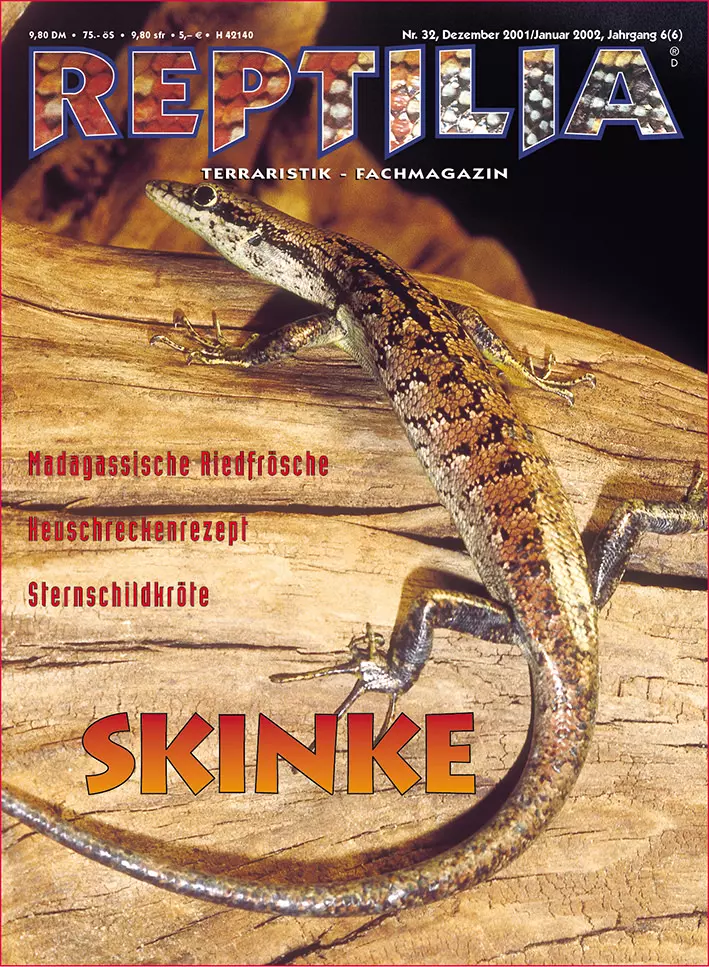
Reptilia 32 - Skinke

Article no: reptilia32

CHF 9.80

Stock: 0

Ready for dispatch in 1-3 days, delivery time 7 working days

Delivery between Tuesday, 12 May and Wednesday, 13 May
Zahlungsarten
Product information "Reptilia 32 - Skinke"

Reptilia 32 Skinks

Madagascan reed frogs
Grasshopper recipe
Star tortoise

Contents:

  • 2 Editorial
  • 3 Magazine
  • 11 Dates
  • 14 Western Herp Perspectives
    The value of the nature experience
    from B. Love
  • 16 Photo reportage
    Skink
    by A. Hauschild
  • 22 Herpetofauna
    Observations on Eumeces (=Novoeumeces) schneideri aldrovandii
    from S. Wegner
  • 28 Keeping and breeding
    On the care and breeding of Algerian skinks (Eumeces [=Novoeumeces] algeriensis) Peters, 1864
    by R. Struijk
  • 35 Keeping and breeding
    Australian snail skink Cyclodomorphus gerradii Grav, 1845 – Care and breeding
  • 41 Reportage
    Delicious, these grasshoppers
    by I. & B. Fritzsche
  • 44 Journey
    A journey to the United Arab Emirates - From the mangroves to the scree desert
    by R. Leptien
  • 51 Portrait and poster
    Elaphe quatorlineata
    from B. Trapp
  • 56 Keeping and breeding
    The Indian star tortoise Geochelone elegans (Schoepf, 1795) – a problematic tropical tortoise? Part 1: Appearance, distribution and local breeds, acclimatisation, introduction to the breeding group
    by J. Bidmon
  • 66 Reportage
    Japan in the year of the snake
    by A. Kast & M. Mori
  • 71 Herpetofauna
    The Madagascan marsh frogs of the genus Heterixalus
    by K. Schmidt, F. Glaw & M. Vences
  • 80 Reptilia on the road
    The snake park "World of Snakes" in Grecia, Costa Rica
    by R. Fenske
  • 87 Classifieds
  • 91 Advice and action
  • 94 Library
  • 104 Gloss
    Our author Dr Specht
    by H. Werning
Composition
Feeding recommendation
Technical details
Size information

0 of 0 reviews

Give us a rating!

Share your experience with the product with other customers.


Suggested products

Handbook of food plants for tortoises and other reptiles
Handbook of forage plants 2nd revised editionMarion Minch is not only a successful breeder of diverse tortoises for many years, but also an excellent connoisseur of native wild herbs. She founded and runs samenkiste.de, which is well known to many tortoise keepers and nature lovers. Her name is inextricably linked with reptile care and species-appropriate nutrition for tortoises. Her handbook of food plants summarises the most important native food plants for herbivorous and omnivorous reptiles. She not only considers tortoises, but also iguanas, spiny-tailed dragons and even chameleons. From the basics of plant biology to native wild herbs to suitable food plants for hardy tropical reptile species, this comprehensive work provides the basis for species-appropriate keeping. In the expanded and supplemented 2nd edition, the plant section is divided according to flower colour. This makes it even easier to identify wild herbs. The work has also been supplemented with a wealth of additional information and many pictures.

CHF 46.50

Geckos
Geckos in the terrarium by Astrid FalkThe book offers a comprehensive introduction to geckos and their species-appropriate keeping in terrariums. It explains what you need to think about before buying a gecko and what preparations should be made. The book describes in detail how the terrarium is technically equipped and set up. The care of the animals, their special features and behaviour, their diet, reproduction and rearing of young animals are described, as well as diseases and husbandry problems with tried and tested suggestions for prevention and treatment. Individual gecko species that are particularly suitable for keeping and breeding in terrariums are portrayed in detail in the second part of the book.

CHF 28.50

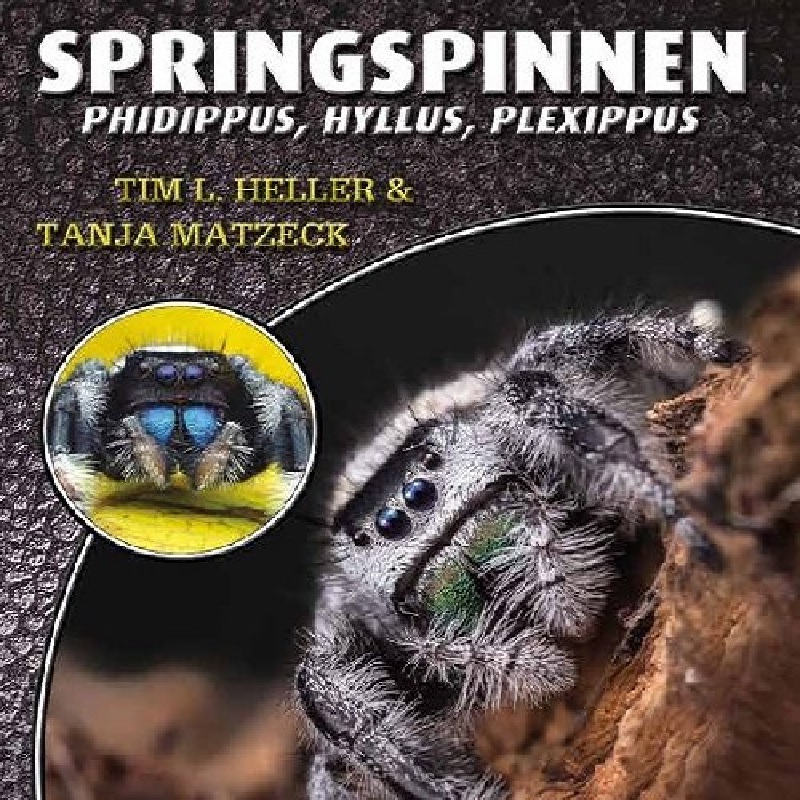
Jumping spiders Phidippus, Hyllus, Plexippus
Book Jumping Spiders - Phidippus, Hyllus & Plexippus A guide to keeping jumping spiders of the genera Phidippus, Hyllus & Plexippus. Who can resist the charm of jumping spiders? The childlike appearance of their expressive face simply leaves no one cold! In addition, their behavior is extremely exciting to observe, their colors are bright and their requirements for species-appropriate keeping are very easy to meet. No wonder these likeable jumpers are all the rage! This volume in the "Species by Species" series describes in detail what to look out for when buying and keeping them, introduces the most commonly kept species and color forms and provides plenty of tips on how to keep them successfully - so you can be sure they will breed well! Species by Species introduces you to the books in this series, which present the most popular terrarium animals. Each volume offers you detailed, practical care instructions and all the information you need to successfully breed your animals. All important questions from the required tank size to terrarium set-up, technical equipment, species-appropriate nutrition and disease prevention are answered with numerous tricks and tips. Experienced, long-standing breeders reveal how you can encourage the animals to reproduce and raise healthy young. All this in full color, generously illustrated and attractively designed - just about your terrarium animal - species by species

CHF 23.90

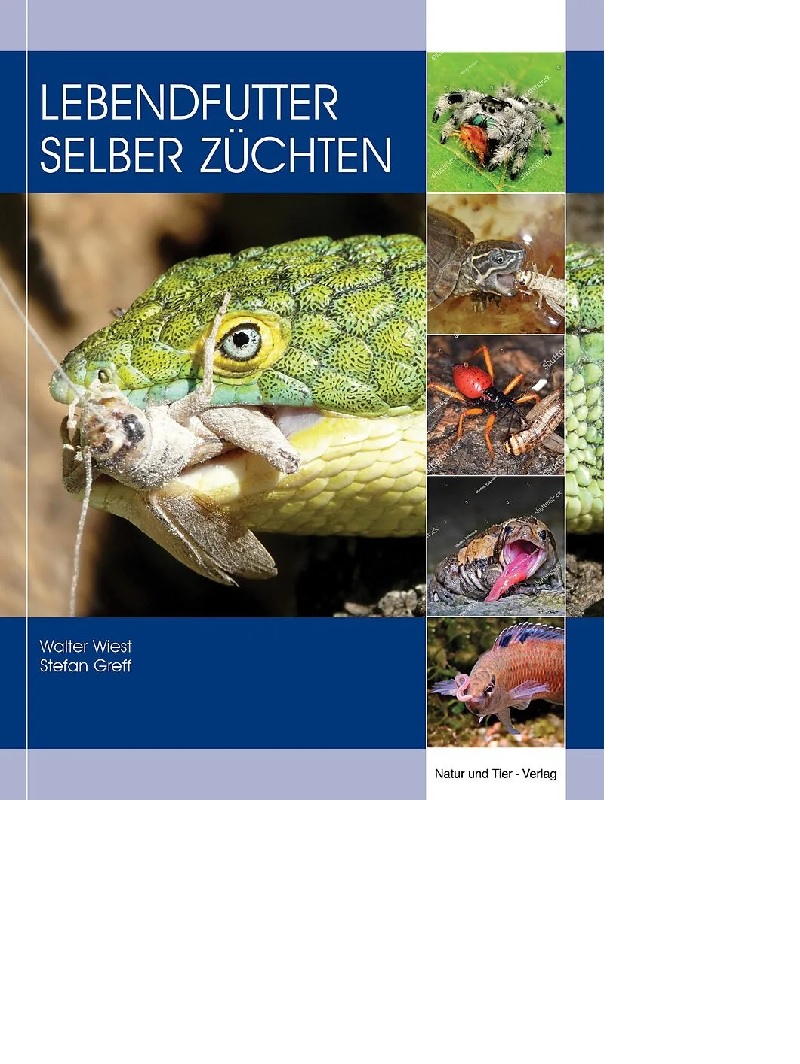
Book Breeding live food yourself
Book "Grow your own live food" - The perfect guide for pet owners Discover practical and detailed instructions on how you can easily breed food for your reptiles, birds, fish or other animals yourself in the book "Breeding live food yourself". With valuable tips on various food insects, their care and breeding, you can save money and ensure a species-appropriate diet for your pets. Contents of the book: Step-by-step instructions for breeding feeder insects Information on the best types of food for reptiles, birds and fish Care instructions and breeding conditions for various live food species Tips for sustainable and cost-effective food production Why breed your own live food? Get healthy, fresh food for your animals Save money and reduce dependence on pet shops Promote the health and well-being of your animals with species-appropriate food Whether you are a beginner or an experienced pet owner, this book provides you with everything you need to successfully breed live food yourself.

CHF 46.50

Marginata 69 - New Guinea tortoises
Marginata 69 - New Guinea tortoises – the genus ElseyaCover storyThe unrecognised beauties: New Guinea tortoises (Andreas S. Hennig)My experiences with Branderhorst's New Guinea tortoise, Elseya (Elseya) branderhorsti (Ouwens, 1914) (Andreas S. Hennig)Keeping and breeding of Rhodin's New Guinea tortoise, Elseya (Hanwarachelys) rhodini Thomson, Amepou, Anamiato & Georges, 2015 (Andreas S. Hennig)PortraitGeoemyda spengleri, Chinese serrated tortoise (Andreas S. Hennig)ReportageMacrochelys temminckii – Experiences and impressions with vulture tortoises part 2 (Reiner Praschag)KeepingAn alternative to year-round keeping of the Egyptian tortoise in the terrarium – my experiences with seasonal outdoor keeping of Testudo kleinmanni (Ricarda Schramm)EtymologySawbacks and living maps part 4: Graptemys gibbonsi, Pascagoula humpback tortoise (Holger Vetter)Classifieds & animal placement

CHF 16.50

Terraria 18 - Building of large terrariums
Terraria 18 - Building Large Terrariums In the rainforests of MadagascarGiant salamander Contents: 2 Editorial Mike ZAWADZKI4 Magazine Remarkable import: Grave frogs of the genus Calluella/DGHT once again a member of the BNA – Opening of a new BNA- training centre in Hambrücken/ 24th Terraristikbörse Karlsruhe in new hall/Legal/Reference/Vegetarian cravings of a garter snake?/Marketplace12 TERRAglobal All beginnings are difficult Maik DOBIEY The forgotten "insufficient data" species Mirco SOLÉ Cover story: Building Large Terrariums16 17 square metres of rainforest Wolfgang DAHM26 When they grow larger – the relocation of the caimans Matthias SCHMIDT35 A terrarium wall for tropical tortoises (Testudinidae) Erica HAMERS & Hans – Dieter PHILIPPEN40 Construction of a large wooden terrarium for diamond pythons Sascha ESSER43 The Kárpathos water frog (Rana cerigensis or Pelophylax cerigensis): Taxonomic change and acute endangerment Hans-Jürgen LUEF50 Giant salamanders of the genus Andrias – a Japanese-Chinese relationship Lutz DIRKSEN58 To the knowledge of an unknown: Cricosaura typica, the Cuban night lizard Ansel FONG G. & Irelis BIGNOTTE-GIRÓ64 Journey Silky sifakas and flat-tailed geckos – the Marojejy National Park Peter KRAUSE & Sebastian WOLF77 New species The smallest frog of the South American Andes Axel KWET A “feather-tailed gecko” from the south-western Angola Mirko BARTS New tree frogs in Europe Axel KWET80 Among researchers The diversity of amphibian species in a lowland rainforest in Borneo Alexander KELLER83 A visit to the Museo da Historia Natural de Asunción, Paraguay Uwe SCHLÜTER88 Near you91 Subscription & Service94 Preview96 Incubator The lizard wall Mike ZAWADZKI 

CHF 12.00

Keeping water turtles
All about keeping water turtles 128 Seiten 116 Farbfotos Format: 16,8 x 21,8 cm Autor Andreas S. Hennig Inhalt: Der erfahrene Terrarianer Andreas S. Hennig gibt in diesem neuen Ratgeber eine umfassende Einführung in die Haltung von Wasserschildkröten.Er stellt Biologie, Pflege- und Nachzuchtbedingungen der beliebten urtümlichen Tiere ausführlich und praxisnah vor und zeigt auf, worauf man für eine erfolgreiche Haltung und Vermehrung von Anfang an achten muss und wie man Probleme erst gar nicht aufkommen lässt.Kompakte Information, bestechende Bilder - ein Muss für alle Schildkrötenfans!

CHF 35.50

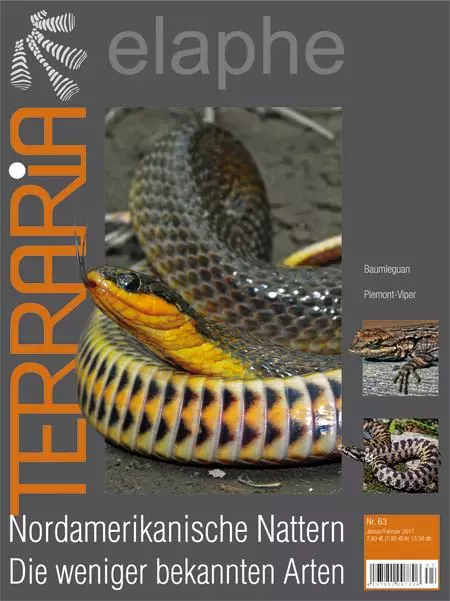
Terraria 63 - North American Vipers
Terraria 63 - North American vipers Contents: Cover story: North American vipers – the lesser known species Everyone immediately thinks of corn and ground snakes, king snakes and perhaps bull snakes when the colubrids of North America are mentioned. However, in addition to these stars of the terrarium hobby, the continent is actually home to a whole range of species that are less popular but no less fascinating and interesting for keeping in terrariums. We go on an excursion to an amazingly species-rich snake habitat and take a closer look at queen snakes, mud snakes and Trans-Pecos rat snakes. Also in TERRARIA/elaphe 1/2017: Observations on a newly discovered European pit viper: Vipera walser What effect does the use of pesticides have on amphibians? Keeping and breeding the arboreal iguana Urosaurus ornatus and much more Territorial HerpetoramaIt's all about the sausage – Aga toads in AustraliaPrehistoric food chain: snake eats lizard eats beetleCultural followers: Famous basilica inhabitants in CataloniaBlattsteiger: A Nazi frog for Donald TrumpThorny devil: Motorzinho frogs from Brazil Cover storyHidden treasuresIn search of snakes in Cape Cod, MassachusettsLeo Spinner The hidden life of mud snakesLeo Spinner The gentle one from the desert mountainsKeeping and breeding the Trans-Pecos rat snakeLeo Spinner Long live the Queen! Lifestyle and keeping of the queen snakeLeo Spinner PanoramaFrogs need friends!Heiko Werning ResearchNew species. New anoles from Hispaniola: green and lichen-coloured anolesAxel Kwet Among researchersYears of expeditions in MadagascarFrank Glaw What effect does the use of pesticides have on amphibian larvae?Norman Wagner Salamandra TerraristicsA terrarium classic returns. The Ornate Iguana, Urosaurus ornatusJoschka Schulz Nature and species conservationField notesFishing water frog in HungaryTamás Tóth Mass death in larvae of yellow-bellied toadsAxel Kwet In search of a newly described viper in the Italian Alps: the Piedmont viper (Vipera walser)Benny Trapp Terrarino – the children's page The "dazzler" among the lizards: The slow wormAlexa Sabarth Subscription & ServiceAlso in your areaPreview IncubatorMedia education, part 1Heiko Werning

CHF 13.50

Chimaira, Encyclopedia of turtles
Chimaira, encyclopaedia of turtlesThis encyclopaedia provides a comprehensive overview of recent turtles. For each species, the most important data on appearance and behaviour have been compiled; the authors were able to go into particular detail on remarkable aspects of morphology or biology, explain a recent discovery or a little-known observation. Endangerment and protection of the respective turtle species are dealt with in detail. The protection of species, but also the protection of habitats, which is just as important for the conservation of the species, are key motifs here. In this way, the threats to each species are systematically presented on the one hand, and the laws that have been passed to protect them and the protective measures that have been introduced to conserve them are listed on the other

CHF 63.50

Reptilia 116 - Aquatic turtles - Perfect pets
Reptilia 116 - Aquatic turtles - Perfect pets Tarantula Oligoxystre diamantinensisChristmas in the African bushIntroduction to keeping venomous snakesContents: Cover story: Aquatic turtles – perfect petsAquatic turtles have enjoyed great popularity for decades. For a long time, however, small baby turtles were offered in pet shops for little money and ended up mainly with keepers who were not terrarium keepers and simply had no idea about these animals. The consequences are well known: overgrown red-eared sliders and other aquatic turtles that were abandoned or ended up in rescue centres. As a result, aquatic turtle keeping has fallen into disrepute. However, aquatic turtles are wonderful pets if you look after them properly and acquire the necessary expertise. We offer an overview of the species currently being kept and provide you with the tools you need to enjoy these charming turtles for a long time. EditorialMAGAZINEDATES WESTERN HERP PERSPECTIVESHerp photography goes crazyB. Love Photo storyFrequently kept aquatic turtle species – an overviewA. S. Hennig PracticeYellow stripes again and again …Information on the identification of commonly kept aquatic turtle speciesA. S. Hennig Keeping and breedingLarge salad with insect garnish. Nutritional advice for commonly kept ornamental, decorative and humpback turtlesA. S. Hennig Keeping and breedingFrom a five-mark piece to a soup plate. The successful rearing of aquatic turtlesA. S. Hennig Keeping and breedingNow also poisonous creatures! My introduction to keeping venomous snakesM. Hallmen Keeping and breedingOligoxystre diamantinensis. A gem in the middle of nowhere among the IschnocolinaeB. Rast & I. Wendt ServicesLIBRARYALSO NEAR YOU JourneyChristmas in the bush. Reptiles and more on Makutsi (South Africa)I. Kober PREVIEW BRUTKASTENLike a fish in waterH. Werning

CHF 12.00

Reptilia 57 - Leopard geckos
Reptilia 57 - Leopard geckos 2 - Editorial4 - Magazine15 - Dates18 - Western Herp Perspectives: In the trap, by B. Love20 - Photo report: The leopard gecko (Eublepharis macularius), by D.Duscha30 - Herpetofauna: Behaviour and biology of the leopard gecko (Eublepharis macularius) in Pakistan, by M. Sharif Khan36 - Keeping and reproduction: Colour and pattern variations of the leopard gecko (Eublepharis macularius), by R. Kreutz42 - Journey: In the Magic Kingdom of the Quetzal - Dream journeys through the land of "Eternal Spring", by K. Kunz51 - Portrait and poster: Trimeresurus flavomaculatus, by M. Gaulke56 - Hepertomedicine: Herpesvirus infections in tortoises - disease, diagnosis and prophylaxis options, by S. Fischer & M. Homuth65 - Care and reproduction: Monkeys with orange legs - Care and reproduction of the Chaco macifrog Phyllomedusa hypochondrialis azurea, by E. Biggi72 - Keeping and reproduction: On keeping the ventral viper Maticora bivirgata flaviceps (Cantor, 1839) in the terrarium, by G. Vogel & P. Freed78 - Terrarium technology: Building instructions for a polystyrene terrarium according to Marco Beck, by M. Schicker86 - Classifieds93 - Advice and action95 - Library104 - Incubator: My flat-sharing community, part 2: The Grand Coalition has promised to solve the problems in the country, but once again nobody is showing up, by H. Werning

CHF 11.20

Reptilia 105 - Successful breeding of Phelsumen
Reptilia 105 - Breeding Phelsumene successfullySouth AfricaChicken eaterNutrition-related diseases in tortoisesContents:The magnificent day geckos of the genus Phelsuma are among the classics in terraristics. They are particularly popular due to their attractive colouration and very good durability. However, this well-known group always has new surprises in store. We provide an overview of the Phelsuma successfully bred in our terrariums and offer something for beginners as well as advanced breeders in our breeding reports.EditorialMAGAZINEDATESWESTERN HERP PERSPECTIVESReptile laws in the so-called United StatesLovePHOTOREPORTAGEKeeping phelsums in the terrarium. A success story?P. BerghofKeeping and reproductionThe Madagascar Day Gecko, Phelsuma grandis: Distribution, Care and BreedingM. RognerKeeping and reproductionPhelsuma madagascariensis madagascariensis (Gray, 1831) – An old acquaintance offers surprisesH.-P. BerghofKeeping and reproductionCare and breeding of Phelsuma pronki Seipp, 1994 and Phelsuma vanheygeni Lerner, 2004H.-P. BerghofREPORTAGEThe Phelsuma interest group. An association of more than 200 day gecko specialistsP. KrauseKeeping and breedingChicken eaters - adorable beastsC. KässerHealthNutrition-related diseases in tortoises M. BaurArachnofaunaA portrait of African ground-dwelling tarantulasK. MannsLibraryServicesALSO NEAR YOUJourneySouth Africa. In search of reptiles along the Garden RouteP. SchoeneckerPREVIEWBRUTKASTEN Where love fallsH. Werning

CHF 12.00