Bugs No. 03 - Tropical land snails

Article no: bugs03

CHF 12.00

Stock: 0

Ready for dispatch in 1-3 days, delivery time 7 working days

Delivery between Tuesday, 12 May and Wednesday, 13 May
Zahlungsarten
Product information "Bugs No. 03 - Tropical land snails"

Bugs - No. 03 - Tropical land snails

Uruguay
Scolopendra hardwickei
Entomological forensics

Contents:

Editorial
Facets
Dates
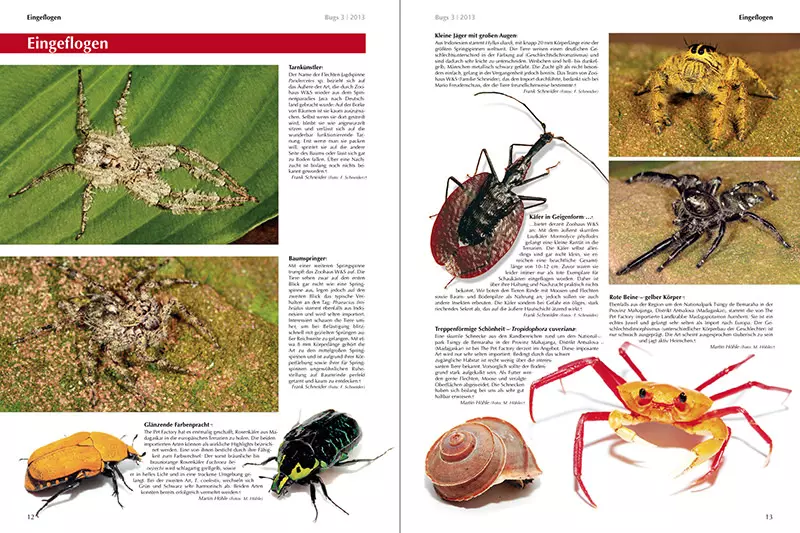
Flown in 

Cover story
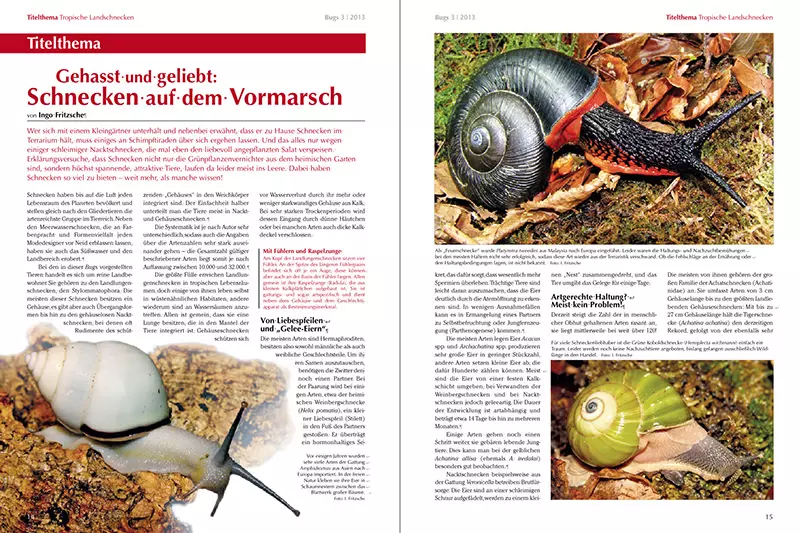
Snails on the advance 

Archachatina - the gentle giants 

Survival in exile 

Fledged
Among spiders and scorpions in Uruguay 

In the crosshairs
Scolopendra hardwickei 

Reportage
Striped newcomer - the wasp spider 

CSI "Fly" - Forensics 

Exemplary arthropods - bionics, part 1 

Practice
Medicinal leeches as pets 

Hybridisation of two phasmid species 

Potter bee
Replacement cocoons for bugs 

Kids Corner
Make yourself a praying mantis! 

Showcase
Locating and capturing grasshoppers 

Book scorpion
Also in your neighbourhood
Service & Imprint
Preview 

Metamorphoses
Play of colours 

Composition
Feeding recommendation
Technical details
Size information

0 of 0 reviews

Give us a rating!

Share your experience with the product with other customers.


Suggested products

Handbook of food plants for tortoises and other reptiles
Handbook of forage plants 2nd revised editionMarion Minch is not only a successful breeder of diverse tortoises for many years, but also an excellent connoisseur of native wild herbs. She founded and runs samenkiste.de, which is well known to many tortoise keepers and nature lovers. Her name is inextricably linked with reptile care and species-appropriate nutrition for tortoises. Her handbook of food plants summarises the most important native food plants for herbivorous and omnivorous reptiles. She not only considers tortoises, but also iguanas, spiny-tailed dragons and even chameleons. From the basics of plant biology to native wild herbs to suitable food plants for hardy tropical reptile species, this comprehensive work provides the basis for species-appropriate keeping. In the expanded and supplemented 2nd edition, the plant section is divided according to flower colour. This makes it even easier to identify wild herbs. The work has also been supplemented with a wealth of additional information and many pictures.

CHF 46.50

Geckos
Geckos in the terrarium by Astrid FalkThe book offers a comprehensive introduction to geckos and their species-appropriate keeping in terrariums. It explains what you need to think about before buying a gecko and what preparations should be made. The book describes in detail how the terrarium is technically equipped and set up. The care of the animals, their special features and behaviour, their diet, reproduction and rearing of young animals are described, as well as diseases and husbandry problems with tried and tested suggestions for prevention and treatment. Individual gecko species that are particularly suitable for keeping and breeding in terrariums are portrayed in detail in the second part of the book.

CHF 28.50

Jumping spiders Phidippus, Hyllus, Plexippus
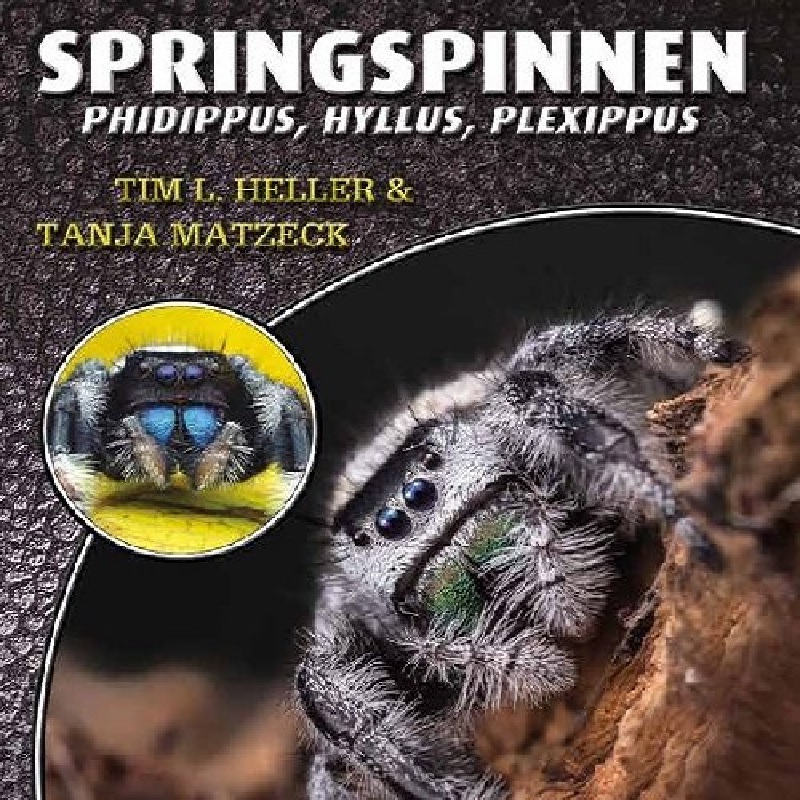
Book Jumping Spiders - Phidippus, Hyllus & Plexippus A guide to keeping jumping spiders of the genera Phidippus, Hyllus & Plexippus. Who can resist the charm of jumping spiders? The childlike appearance of their expressive face simply leaves no one cold! In addition, their behavior is extremely exciting to observe, their colors are bright and their requirements for species-appropriate keeping are very easy to meet. No wonder these likeable jumpers are all the rage! This volume in the "Species by Species" series describes in detail what to look out for when buying and keeping them, introduces the most commonly kept species and color forms and provides plenty of tips on how to keep them successfully - so you can be sure they will breed well! Species by Species introduces you to the books in this series, which present the most popular terrarium animals. Each volume offers you detailed, practical care instructions and all the information you need to successfully breed your animals. All important questions from the required tank size to terrarium set-up, technical equipment, species-appropriate nutrition and disease prevention are answered with numerous tricks and tips. Experienced, long-standing breeders reveal how you can encourage the animals to reproduce and raise healthy young. All this in full color, generously illustrated and attractively designed - just about your terrarium animal - species by species

CHF 23.90

Book Breeding live food yourself
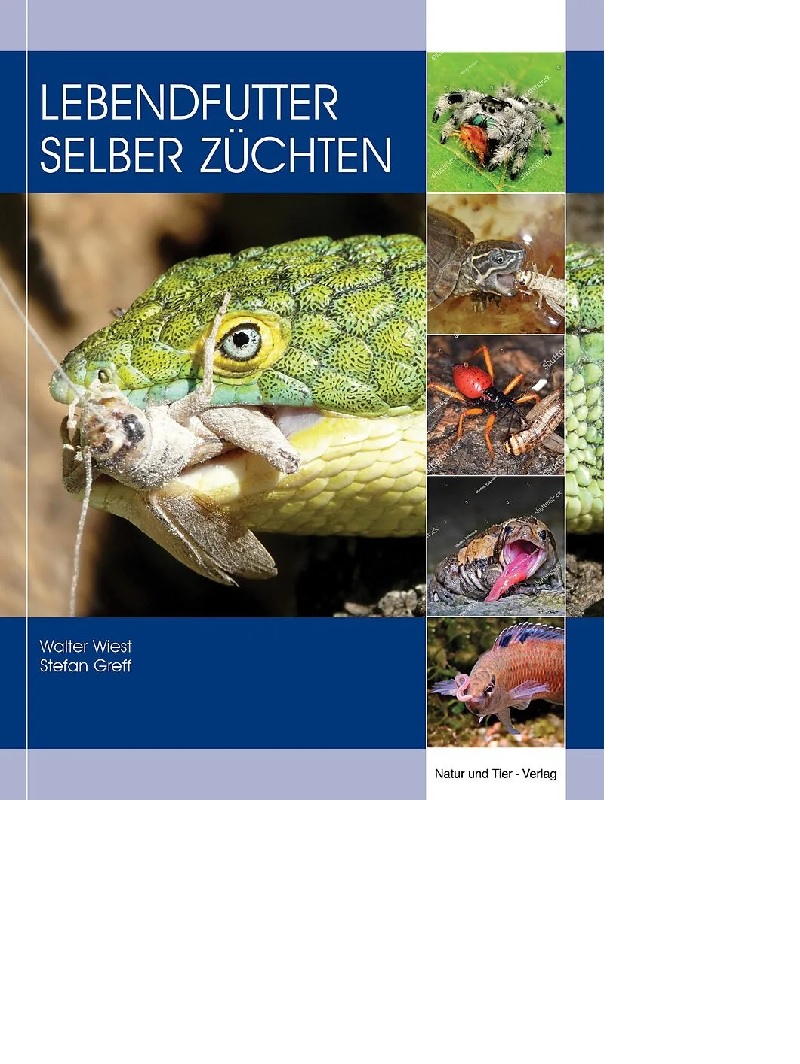
Book "Grow your own live food" - The perfect guide for pet owners Discover practical and detailed instructions on how you can easily breed food for your reptiles, birds, fish or other animals yourself in the book "Breeding live food yourself". With valuable tips on various food insects, their care and breeding, you can save money and ensure a species-appropriate diet for your pets. Contents of the book: Step-by-step instructions for breeding feeder insects Information on the best types of food for reptiles, birds and fish Care instructions and breeding conditions for various live food species Tips for sustainable and cost-effective food production Why breed your own live food? Get healthy, fresh food for your animals Save money and reduce dependence on pet shops Promote the health and well-being of your animals with species-appropriate food Whether you are a beginner or an experienced pet owner, this book provides you with everything you need to successfully breed live food yourself.

CHF 46.50

Marginata 69 - New Guinea tortoises
Marginata 69 - New Guinea tortoises – the genus ElseyaCover storyThe unrecognised beauties: New Guinea tortoises (Andreas S. Hennig)My experiences with Branderhorst's New Guinea tortoise, Elseya (Elseya) branderhorsti (Ouwens, 1914) (Andreas S. Hennig)Keeping and breeding of Rhodin's New Guinea tortoise, Elseya (Hanwarachelys) rhodini Thomson, Amepou, Anamiato & Georges, 2015 (Andreas S. Hennig)PortraitGeoemyda spengleri, Chinese serrated tortoise (Andreas S. Hennig)ReportageMacrochelys temminckii – Experiences and impressions with vulture tortoises part 2 (Reiner Praschag)KeepingAn alternative to year-round keeping of the Egyptian tortoise in the terrarium – my experiences with seasonal outdoor keeping of Testudo kleinmanni (Ricarda Schramm)EtymologySawbacks and living maps part 4: Graptemys gibbonsi, Pascagoula humpback tortoise (Holger Vetter)Classifieds & animal placement

CHF 16.50

Terraria 55 - Snakes eating invertebrates
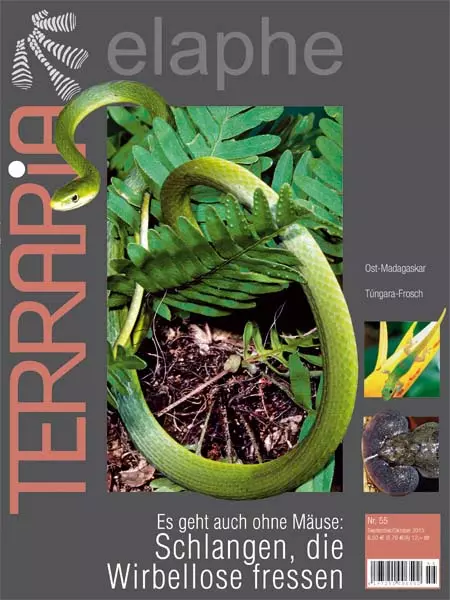
Terraria 55 - Snakes that eat invertebrates Túngara frogEast Madagascar Contents: Cover story: It works without mice: Snakes that eat invertebrates Most snakes in terraria have to be fed on rodents. However, there are a whole range of often lesser known but highly interesting species that exclusively eat invertebrates such as insects, snails and others. We present a selection of the most interesting representatives and discuss in detail the dwarf snakes of the genus Eirenis and the brown snakes of the genus Storeria. We also reveal how to breed slugs for feeding snail-eating snakes. Territorial HerpetoramaWorld's first reproduction of an endangered clawed frog species: Xenopus longipes Species diversity on the display Thorny devil: Kermit frog in Costa Rica Cultural followers: The reign of the terror lizards Pappochelys – a 240 million year old “turtle grandpa” Poison dart frog: Death of a turtle breeder Cover storySnakes that eat invertebratesKriton Kunz Terraristic remarks on the snakes of the genus StoreriaFrank Täufer Habitat and terrarium observations on dwarf snakes of the genus Eirenis from south-west SyriaHans Esterbauer Collect and breed slugsHerbert Stern PanoramaDiary of a trip to eastern Madagascar. Visiting the Marojejy National Park and the Betampona Nature ReservePeter Baert Research New speciesNew moccasin snakes in North AmericaAxel Kwet Among researchersHerpetology in theory and practice A journey to the Caribbean north of ColombiaClaudia Koch Salamandra TerraristicsFoam maker and top model. Exciting things surrounding the Túngara frog.Part 1: Behaviour and bioacousticsKriton Kunz Bibliography Ophiophagy in snakes in terrariaDieter Schmidt Nature and species protection Field notesGrass snakes hunting newtsRudolf Malkmus Common toad clings to common carpJörn Krütgen Children's page on the reptile of the year: The European pond turtle The snake plagueAxel Hilger & Axel Kwet Amphibian action plan for northwest BrazilMirco Solé Also in your areaSubscription & ServicePreview Incubator No gecko at allRolf Leptien

CHF 12.00

Tortoises Volume 3 - Outdoor enclosures
Outdoor enclosures for European tortoises A guide to natural husbandry in your own garden – 14–99 years Fortunately, the design of natural enclosures for European tortoises has increasingly become a focus for many tortoise owners in recent years. The tortoises’ natural habitat should serve as a model for keeping them in your own garden. The third volume in the series ‘Guide to Keeping European Tortoises’ deals with the topic of outdoor enclosures. In this book, authors Torsten Kiefer and Thorsten Geier share their many years of experience in designing tortoise enclosures. Taking nature as a model, this book provides a wealth of information on enclosure size, fencing and creating as diverse an environment as possible. The topic of cold frames and greenhouses is also presented in detail, including the necessary equipment. Furthermore, there is extensive information on food and enclosure plants (as well as unsuitable or poisonous plants) and a description of various enclosures for breeding, balcony enclosures, emergency enclosures, etc. Numerous photos showcase outdoor enclosures of all kinds and are intended to provide inspiration for your own garden. Other topics include accidents in enclosures, protection against predators and common mistakes in tortoise enclosures. This book aims to highlight the importance of natural husbandry in outdoor enclosures and to present the ‘European tortoises’ (Hobby) from a very special perspective. A book packed with ideas for designing outdoor enclosures.

CHF 28.90

The western rat snake
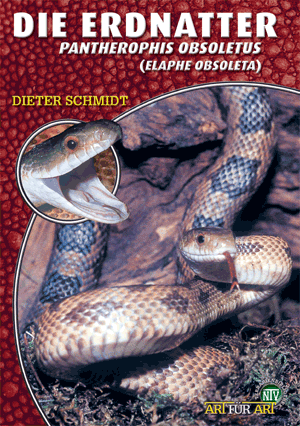
The Earth Snake by Dieter Schmidt 64 pages 14.8 x 21 cm numerous colour photos Contents: The earth snake is a true classic of terraristics. The elegant, powerful snake is highly sought after in all its many subspecies and attractive colour variants. The fact that their care and breeding are also possible for beginners makes the earth snake all the more recommendable. The long-standing, well-known snake expert Dieter Schmidt presents the earth snake in all its fascinating facets in this guide and describes vividly how to care for the animals appropriately, breed them successfully and raise the young snakes. Systematics and body structure The fascinating biology: From the life of the earth snake All information on species-appropriate keeping: from suitable terrariums to equipment and technology through to feeding Successful breeding: Mating stimulation, incubation of the eggs and rearing of the young animals Problem solutions: How to avoid the most common mistakes in care, and how to help sick animals Brilliant photos

CHF 18.50

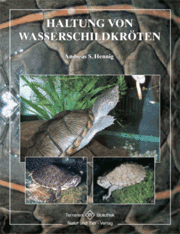
Keeping water turtles
All about keeping water turtles 128 Seiten 116 Farbfotos Format: 16,8 x 21,8 cm Autor Andreas S. Hennig Inhalt: Der erfahrene Terrarianer Andreas S. Hennig gibt in diesem neuen Ratgeber eine umfassende Einführung in die Haltung von Wasserschildkröten.Er stellt Biologie, Pflege- und Nachzuchtbedingungen der beliebten urtümlichen Tiere ausführlich und praxisnah vor und zeigt auf, worauf man für eine erfolgreiche Haltung und Vermehrung von Anfang an achten muss und wie man Probleme erst gar nicht aufkommen lässt.Kompakte Information, bestechende Bilder - ein Muss für alle Schildkrötenfans!

CHF 35.50

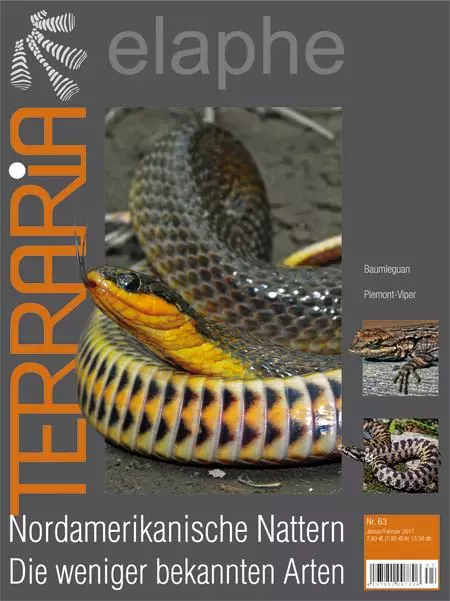
Terraria 63 - North American Vipers
Terraria 63 - North American vipers Contents: Cover story: North American vipers – the lesser known species Everyone immediately thinks of corn and ground snakes, king snakes and perhaps bull snakes when the colubrids of North America are mentioned. However, in addition to these stars of the terrarium hobby, the continent is actually home to a whole range of species that are less popular but no less fascinating and interesting for keeping in terrariums. We go on an excursion to an amazingly species-rich snake habitat and take a closer look at queen snakes, mud snakes and Trans-Pecos rat snakes. Also in TERRARIA/elaphe 1/2017: Observations on a newly discovered European pit viper: Vipera walser What effect does the use of pesticides have on amphibians? Keeping and breeding the arboreal iguana Urosaurus ornatus and much more Territorial HerpetoramaIt's all about the sausage – Aga toads in AustraliaPrehistoric food chain: snake eats lizard eats beetleCultural followers: Famous basilica inhabitants in CataloniaBlattsteiger: A Nazi frog for Donald TrumpThorny devil: Motorzinho frogs from Brazil Cover storyHidden treasuresIn search of snakes in Cape Cod, MassachusettsLeo Spinner The hidden life of mud snakesLeo Spinner The gentle one from the desert mountainsKeeping and breeding the Trans-Pecos rat snakeLeo Spinner Long live the Queen! Lifestyle and keeping of the queen snakeLeo Spinner PanoramaFrogs need friends!Heiko Werning ResearchNew species. New anoles from Hispaniola: green and lichen-coloured anolesAxel Kwet Among researchersYears of expeditions in MadagascarFrank Glaw What effect does the use of pesticides have on amphibian larvae?Norman Wagner Salamandra TerraristicsA terrarium classic returns. The Ornate Iguana, Urosaurus ornatusJoschka Schulz Nature and species conservationField notesFishing water frog in HungaryTamás Tóth Mass death in larvae of yellow-bellied toadsAxel Kwet In search of a newly described viper in the Italian Alps: the Piedmont viper (Vipera walser)Benny Trapp Terrarino – the children's page The "dazzler" among the lizards: The slow wormAlexa Sabarth Subscription & ServiceAlso in your areaPreview IncubatorMedia education, part 1Heiko Werning

CHF 13.50

Reptilia 98 - Sick due to reptiles? About the [alleged] danger of salmonella
Reptilia 98 - Sick due to reptiles? About the [alleged] danger of salmonella Drosophila food animal breedingUnderwoodisaurus miliiToad-headed tortoises Contents: EDITORIALMAGAZINEDATES AROUND THE WORLD IN 5 YEARSTree creepers instead of flowersA. Pachmann WESTERN HERP PERSPECTIVES   American herp problemsB. Love REPORTAGEAttack with bioweapons: Salmonella tactics against the terrarium hobbyH. Werning ReportageSalmonella in amphibians and reptiles. The importance of terrarium animals as sources of infection for humansF. Mutschmann HerpetofaunaPhrynops. The genus of toad-headed tortoisesH. - D. Philippen ReportageIn the land of the golden ants. Splendour to the end of the worldM. Freuding Keeping and breedingThe Australian fat-tailed gecko, Underwoodisaurus miliiS. Arth & S. Baus Terrarium practiceCursed in the kitchen, loved in the terrarium: fruit fliesU. Dost Terrarium displaysLa Ferme aux Crocodiles in Pierrelatte/Southern FranceM. Dieckmann LibraryTest runTips & tricksSUBSCRIPTION & SERVICEALSO NEAR YOU TRAVELDzanga-Sangha. In search of frogs between elephants and gorillasJ. M. Dehling & D. M. Dehling PREVIEWBRUTKASTENSpecies protection reportH. Werning

CHF 12.00

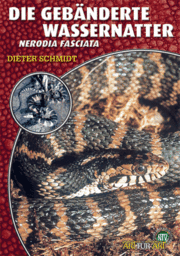
The banded water snake
All about the banded water snake from Dieter Schmidt 64 pages 14.8 x 21 cm numerous color photos Author Dieter Schmidt Content: Watermans have always been one of the most popular terrariums. The Wassernatter, the water-racketeer, shows all the advantages of being a friend of the serpent of his caregiver. It is attractively drawn, easily satisfied with fish as food, is not too large, and has a tempered temperament.Dieter Schmidt, the experienced snake expert, will give you a wealth of experience in this guidebook and explain everything you need to know about the successful keeping and care of this popular species. The author goes into the multiplication of the animals and the rearing of the young - so you will soon be able to celebrate such successes. Systematics and physique The fascinating biology: From the life of the Banded Watercats All information on species-appropriate husbandry: From the appropriate terrarium to equipment and technology to feeding Successfully reproducing: mating stimulation and rearing of the young animals Troubleshooting: How to avoid the most common mistakes in care, and how to help sick animals Brilliant photos

CHF 18.50