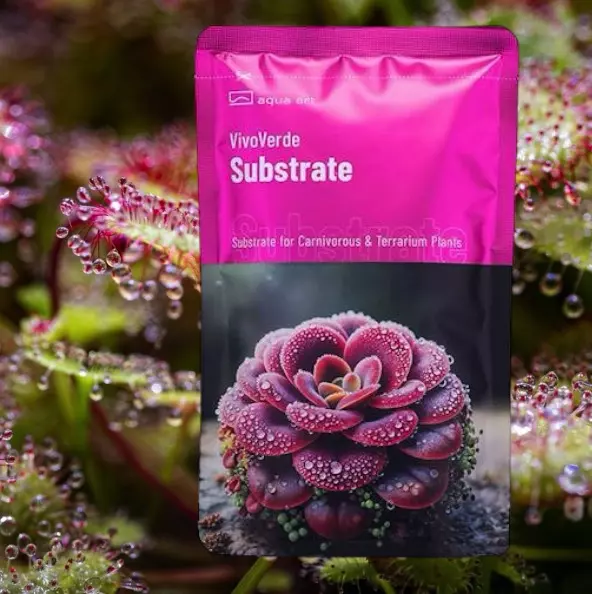
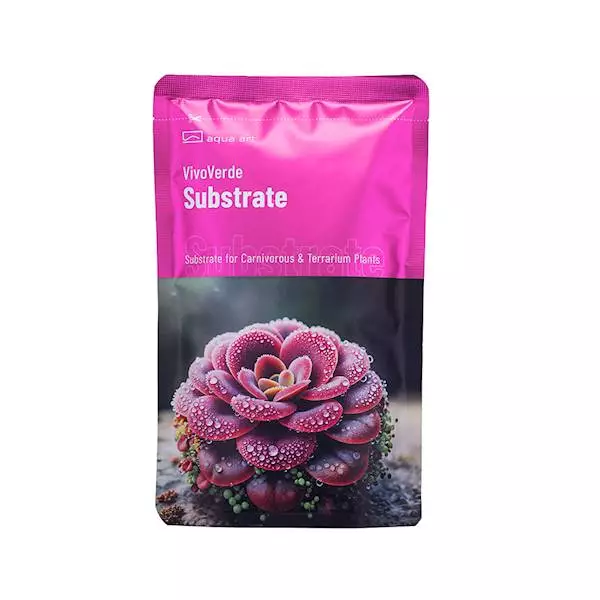
Substrate for carnivorous plants

  • special substrate
  • carnivorous plants
  • granules
  • 0,3 liter
Article no: ZJ-350678

CHFΒ 5.90

Stock: 27

Available, delivery time: 1-3 days

Delivery between Tuesday, 5 May and Wednesday, 6 May
Zahlungsarten
Product information "Substrate for carnivorous plants"

VioVerde substrate for carnivorous plants

VivoVerde substrate for carnivorous plants - perfect soil for carnivores

VivoVerde substrate for carnivorous plants is the ideal choice for all lovers of Venus flytraps, tubular plants, sundews and other carnivores. Specially developed to meet the natural needs of these unique plants, the high-quality special substrate ensures optimum water retention, a loose structure and a low nutrient content - exactly what carnivorous plants need.

Why should you buy this substrate from VivoVerde?

  • Perfectly balanced - High-quality mixture of peat and perlite for ideal air permeability
  • Low in nutrients & pH-neutral - Supports healthy root growth and prevents waterlogging
  • No artificial fertilizers - Natural for species-appropriate cultivation
  • Ideal for Venus flytraps, tubular plants, sundew & co.

With VivoVerde substrate, your carnivorous plants will grow healthy and strong - without any additional fertilizer.

Zoo Roco tip!

Carnivorous plants must not be planted in normal potting soil. They need a substrate that is free of fertilizer, as these plants grow in poor soil in the wild. This is why they have specialized in catching insects in order to obtain nutrients. If you want to fill large containers, you can use pure white peat.

Composition
Feeding recommendation
Technical details
Size information

1 of 1 reviews

5 out of 5 stars


100%

0%

0%

0%

0%


Give us a rating!

Share your experience with the product with other customers.


6 March 2026 07:24

très bon substrat

très bon substrat

Customers also bought

Pinguicula Niklas - carnivorous plant
Carnivorous plant - Pinguicula Niklassupplied in an in vitro cupDiameter up to 5.5cmHumidity: 50-80%Temperature: 15-25 Β°C Flowering light pink mostly in springPinguicula 'Niklas' is a fascinating hybrid created by crossing Pinguicula moranensis and Pinguicula emarginata. This plant has unique characteristics with two different rosettes for the different seasons: a winter rosette with non-carnivorous, succulent leaves and a summer rosette with carnivorous leaves that vary in color from yellow to red-green depending on the incidence of light.Size: The diameter of the rosette can reach up to 5.5cm. Flowers: Delicate, attractive flowers, usually pink to light purple with a white or lighter throat.Light: Pinguicula Niklas prefers bright, indirect light with occasional direct sunlight.Substrate: A well-drained mixture often consisting of peat, perlite and sand.Feeding/fertilizing: Avoid fertilizing the substrate! The plant gets all the nutrients it needs from the prey it catches or eats.Humidity: The humidity should be between 50-80%. Temperature: The ideal temperature for this plant is 15-25 Β°CPropagation: Propagation is by leaf cuttingsThe combination of carnivorous plants with reptiles reptiles in a terrarium can create an aesthetically pleasing and ecologically interesting environment. Carnivorous plants such as Drosera, Nepenthes, Pinguicula and Sarracenia are not only exotic and beautiful, they also they also contribute to a balanced ecosystem by controlling the population of small insects. small insects.

CHFΒ 12.90

Pinguicula Tina - carnivorous plant
Carnivorous plant - Pinguicula Tina supplied in an in vitro cupDiameter up to 10-15 cmHumidity: 50-80%Temperature: 22-29 Β°CAttractive flowers, mostly lavender to light purplePinguicula Tina is a cross between Pinguicula agnata and Pinguicula zecheri and is also known as "Hans". It produces large, light green leaves that grow in a rosette. Although the leaves can be large, they are rather thin and can droop a little. This variety retains a consistent light green color and blooms profusely with large light purple flowers that have a darker center and distinct veins and edges.size: The diameter of the rosette can be up to 10-15 cm Flowers: Blooms in spring and summer. Delicate and attractive flowers, mostly lavender to light purple with a white or lighter throat. One flower is produced per stem.Light: Pinguicula Tina prefers bright, indirect light with occasional direct sunlight.Substrate: A well-drained mixture often consisting of peat, perlite and sand.Feeding/fertilizing: Avoid fertilizing the substrate! The plant gets all the nutrients it needs from the prey it catches or eats.Humidity: The humidity should be between 50-80%. Temperature: The ideal temperature for this plant is 22-29 Β°CPropagation: Propagation is by leaf cuttings or division.The combination of carnivorous plants with reptiles reptiles in a terrarium can create an aesthetically pleasing and ecologically interesting environment. Carnivorous plants such as Drosera, Nepenthes, Pinguicula and Sarracenia are not only exotic and beautiful, they also they also contribute to a balanced ecosystem by controlling the population of small insects. small insects.

CHFΒ 12.90

Pinguicula Florian - carnivorous plant
Carnivorous plant - Pinguicula Floriansupplied in an in vitro cupeasy to keepThe diameter of the rosette is approx. 1 cmSunlight, 16-hour dayHumidity: 50-80%Temperature: 22-29 Β°CPale pink flowerPinguicula 'Florian' is a hybrid of Pinguicula 'Debbertiana' and Pinguicula. 'Esseriana'. Pinguicula 'Florian' was registered as a cultivar in 2004 and is named after the breeder's eldest son. The plant Pinguicula 'Florian' has leaves that turn an intense red color in strong light.This is an easy-to-grow species of carnivorous plant and therefore also suitable for beginners.Size: The rosette reaches a diameter of only 1-2 cm. Excellent for cultivation in the small WabiKusa jars. Flowers: The flower emerges from the winter rosette and is pale pink.Light: The plant prefers partial to full sun, 16 hours of light per day Substrate: An airy and well-drained mixture, usually consisting of peat moss and perlite or coarse sand. Feeding/ fertilizing: The plant does not require special fertilization as it absorbs nutrients through insects. The plant can be fed Drosophila from time to time. Springtails that stray onto the plant are also eaten.Humidity: The ideal humidity is between 50 % and 80 % with sufficient air circulation. During the insectivorous phase, provide sufficient distilled water to keep the medium moist. The plant can also tolerate dry periods. Temperature: The plant grows well at temperatures between 22Β°C and 29Β°C.Propagation: Propagation takes place via leaf cuttings. The leaf is broken off at the base and placed on the moist substrate. New plants will form after a few weeks. The combination of carnivorous plants with reptiles reptiles in a terrarium can create an aesthetically pleasing and ecologically interesting environment. Carnivorous plants such as Drosera, Nepenthes, Pinguicula and Sarracenia are not only exotic and beautiful, but they also contribute to a balanced ecosystem by controlling the population of small insects. small insects.

CHFΒ 12.90

Drosera nidiformis x natalensis - carnivorous plant
Carnivorous plant - Drosera nidiformis x natalensissupplied in an in vitro cupThe diameter of the adult plant is 5 cm.The plant prefers full sun16 hours of light / dayHumidity: 50-70%Temperature: 20-28Β°CDormancy period: none Drosera nidiformis x natalensis is a hybrid of Drosera nidiformis and Drosera natalensis. It has a maximum diameter of around 5 cm. It is ideal for small terrariums, planters and arrangements with other carnivorous plants.Drosera nidiformis x natalensis is an easy to cultivate insectivorous plant that insectivorous plant that is perfect for beginners interested in insectivores. interested in insectivores. With its attractive shape and relatively simple requirements, it is an interesting addition to any for any collection of insect plants.Size: The adult plant reaches a diameter of 5 to 7.6 cm. Leaf color: Plant color ranges from deep olive green to wine red in the right light. Stronger lighting leads to a more reddish color.light: Drosera nidiformis x natalensis prefers full sun or bright, diffused light for most of the day. At home, it is best placed on a sunny windowsill or under plant lamps.Substrate: The best substrate for Drosera nidiformis x natalensis is a mixture of sphagnum peat and perlite or sand in a 1:1 ratio. The substrate should be acidic (pH 4.5-5.5) and well-drained. Feeding/fertilizing: Sedums generally do not need additional fertilization as they absorb nutrients from the insects they catch. Occasionally you can feed the plant with small insects such as fruit flies.Humidity: This plant prefers moderate to high humidity, usually 50-70%. Regular spraying is sufficient.The hybrid sundew requires constant moisture in the substrate. It is best watered with distilled, demineralized or rainwater, although tap water should be avoided. The substrate should be moist but not flooded. Temperature: The sundew hybrid grows best at moderate temperatures. The optimum temperature range is 20-28 Β°C during the day and 10-18 Β°C at night. The plant can tolerate lower temperatures, but is not frost-hardy.The combination of carnivorous plants with reptiles reptiles in a terrarium can create an aesthetically pleasing and ecologically interesting environment. Carnivorous plants such as Drosera, Nepenthes, Pinguicula and Sarracenia are not only exotic and beautiful, they also they also contribute to a balanced ecosystem by controlling the population of small insects. small insects.

CHFΒ 9.90

Drosera spatulata carnivorous plant
Carnivorous plant - Drosera spatulatasupplied in an in vitro cupVery adaptable and easy to keeprosette diameter 5cmfull sunlighthumidity: 50-70%the optimum temperature range is 15-25 Β°CPink or white flowersDrosera spatulata, also known as spoon-shaped sundew, is a small, perennial, insectivorous plant found in Asia, Australia and New Zealand. It is prized for its adaptability to different environmental conditions, making it one of the easiest sundews to cultivate. The plant forms low leaf rosettes with a diameter of up to 5 cm and individual spoon-shaped leaves. Each leaf is covered with red, sticky hairs (tentacles) that secrete a sweet substance that attracts insects. Once an insect is caught, the leaves slowly curl up and begin digestion.Drosera spatulata is an excellent choice for beginners interested in insectivorous plants. Due to its small size and ease of cultivation, it is ideal for growing in terrariums or WabiKusa jars.size: The rosettes are rather small with a final diameter of 5cm. Flowers: The flowers are pink or white and grow on an approx. 20cm long flower stalk.Light: Drosera spatulata requires full sun or bright, diffused light for most of the day. Provide at least 12 hours of light.Substrate: The ideal substrate for Drosera spatulata is a mixture of sphagnum peat and sand or perlite in a 1:1 ratio. The substrate should be acidic (pH 4.5-5.5) and well-drained. The spoon-leaved sundew requires constant moisture in the substrate. It is best watered with distilled, demineralized or rainwater, although tap water should be avoided. The substrate should be moist but not flooded. Feeding/ fertilizing: The sundew does not require additional fertilization as it absorbs the nutrients from the insects it catches. Occasionally you can feed the plant with small insects such as fruit flies.Humidity: This plant prefers high humidity, although it can also adapt to drier conditions. It is recommended to maintain a humidity of 50-70%.Temperature:The spoon-leaved sundew can tolerate a range of temperatures, but grows best in moderate conditions. The optimum temperature range is 15-25 Β°C. It can also tolerate lower temperatures, but cannot tolerate frost.Propagation: Some varieties of this plant grow in regions with short growing seasons growing seasons or changeable climates. Genetically adapted to this, they grow quickly and flower at a small size. From the germinating seed to the fully grown, flowering plant often only six months.The combination of carnivorous plants with reptiles in a terrarium reptiles in a terrarium can create an aesthetically pleasing and ecologically interesting environment. Carnivorous plants such as Drosera, Nepenthes, Pinguicula and Sarracenia are not only exotic and beautiful, but they also they also contribute to a balanced ecosystem by controlling the population of small insects. small insects.

CHFΒ 9.90

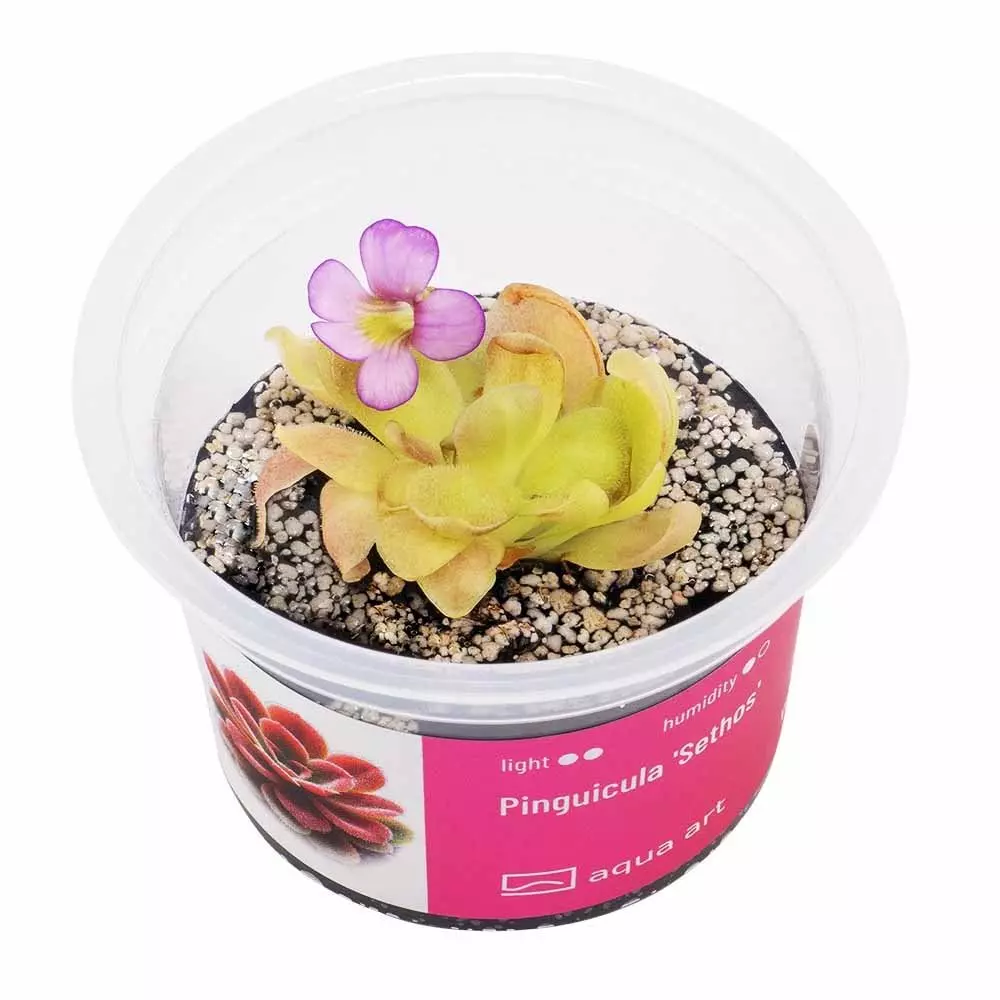
Pinguicula Moranensis carow - carnivorous plant
Carnivorous plant - Pinguicula Moranensis carow supplied in an in-vitro cupDiameter up to 5.5 cmHumidity: 50-80 %Temperature: 22-29 Β°CAttractive plant, with fleshy leavesPinguicula 'Moranensis carow' is an exceptional plant that attracts attention with its unique appearance.Color and size:The mature plant reaches a diameter of 5.5 cm or more. The color of the leaves can vary from light green to pink depending on the light intensity.Light: The plant prefers partial to full sun or the equivalent of grow light, 16 hours of light per day.Substrate:A well-drained mix often consisting of peat, perlite and sand.Feeding: Spray with TropicalRain to meet nutrient requirements. Feeding with insects is not recommended.Humidity: The ideal humidity is between 50 % and 80 % with sufficient air circulation. Provide sufficient distilled water during the insect-feeding phase to keep the medium moist. Reduce watering and allow the medium to dry out regularly. When the succulent rosette begins to form, use Tropical Rain for watering.Temperature: The plant grows well at temperatures between 22Β°C and 29Β°C.Winter dormancy: Technically none, but the insect-like leaves are replaced by a smaller succulent rosette for part of the year. If the temperature or humidity is too low, the plant may stop growing. The combination of carnivorous plants with reptiles reptiles in a terrarium can create an aesthetically pleasing and ecologically interesting environment. Carnivorous plants such as Drosera, Nepenthes, Pinguicula and Sarracenia are not only exotic and beautiful, but they also contribute to a balanced ecosystem by controlling the population of small insects. small insects.

CHFΒ 12.90

Suggested products

Mixed foliage 5 liters
HabiStat mixed foliage100% natural terrarium leaves for bioactive enclosures HabiStat leaves are the perfect choice for creating a natural look in your terrarium. 100% natural leaves replicate the larger elements of the undercanopy and enhance the look and function of any enclosure. Ideal for bioactive setups and for use under the HabiStat leaf litter range. Also suitable for rodents such as hamsters, gerbils and degus as adventure bedding. Keep the bedding for small animals dry and do not moisten. Product advantages 100% natural: No chemical additives - safe for reptiles, amphibians and invertebrates. Enriches the enclosure: Creates hiding places, burrows and water deposits for small species. Promotes microclimate: Supports the formation of valuable moisture zones in the substrate. Supports bioactive terrariums: Provides food, shelter and habitat for cleaning fauna. Natural aesthetics: Gives the enclosure a lively, realistic look. Ideal for combining: Perfect under HabiStat leaf litter or in bioactive ecosystems. Areas of application Bioactive terrariums with reptiles, amphibians or invertebrates Near-natural design of rainforest, woodland or deciduous forest layouts Combination with substrate and leaf litter for stabilized microclimates Zoo Roco tip For a particularly realistic ecosystem, we recommend regularly moving the leaves slightly and combining them with moss or pieces of bark. This creates varied structures that burrowing and feeding species particularly like to use.

CHFΒ 11.90

Forest floor leaf litter 5 liters
HabiStat forest floor leaf litterNatural litter for terrariums (5 L) HabiStat Forest Floor Leaf Litter provides a lifelike replica of the foliage layer of a real forest floor. The diverse mixture of high-quality, dried leaves creates an authentic habitat and promotes species-appropriate behavior in reptiles, amphibians and invertebrates. The natural structure conveys a sense of security, encourages searching, digging and hiding and at the same time enhances the appearance of any terrarium.Also suitable for rodents such as hamsters, gerbils and degus as adventure bedding.Keep the bedding dry and do not moisten. Advantages and properties Natural mixture of leaves for realistic imitation of forest floor Creates stable microclimates and regulates moisture levels Promotes a healthy substrate and supports bioactive processes Ideal for cleaning fauna such as isopods, millipedes and beetles - serves as cover and as a food source Perfect for tropical and temperate terrarium set-ups 100% natural, without additives - fully compostable Contents: 5 liters Use in the terrarium The foliage can be applied over a large area as a cover layer and thus supports humidity regulation. At the same time, it provides retreats and food for invertebrates, which enrich the soil with valuable nutrients and thus promote plant growth. Ideal for use in bioactive terrariums with auxiliary fauna and natural planting. Zoo Roco tip For a particularly stable microclimate, we recommend regularly loosening the HabiStat Leaf Litter slightly and combining it with other natural materials such as moss or pieces of bark. This creates an even more varied soil structure, which reptiles and invertebrates particularly like to use.

CHFΒ 11.90

Black peat sods
Black peat sod from PetfactoryBlack peat sods are compact blocks of black peat, a highly decomposed, humus-rich peat. They are often used in aquariums and terrariums, especially in tropical terrariums.Due to their ability to store moisture, they help to stabilize the climate in the terrarium and are of completely natural origin. They can be planted with mosses and ferns. Another advantage of black peat sods is that they are easy to work with using standard tools such as saws, drills or files. This enables the individual design of back or side walls as well as the creation of terraces or hilly landscapes in the terrarium. They are also ideal for tying up bromeliads or orchids.This is a natural product, which is why not every piece is identical.Size approx: Length 30 cm βˆ… 7 cm

CHFΒ 5.90

Cocodream Premium substrate
Copacabana Cocodream Premium bedding, 20 lThe coconut shells are ideal as terrarium substrate as they naturally increase the humidity in the terrarium due to their high water retention. They also have a germ-inhibiting effect and prevent mold growth. Thanks to their low weight, they are easy to move and offer ideal conditions for digging. Coconut bedding for reptiles100% vegetableMade from renewable raw materialsInhibits germsCompostable and environmentally friendlyEffectively odor-bindingContents: 20 liters

CHFΒ 13.90

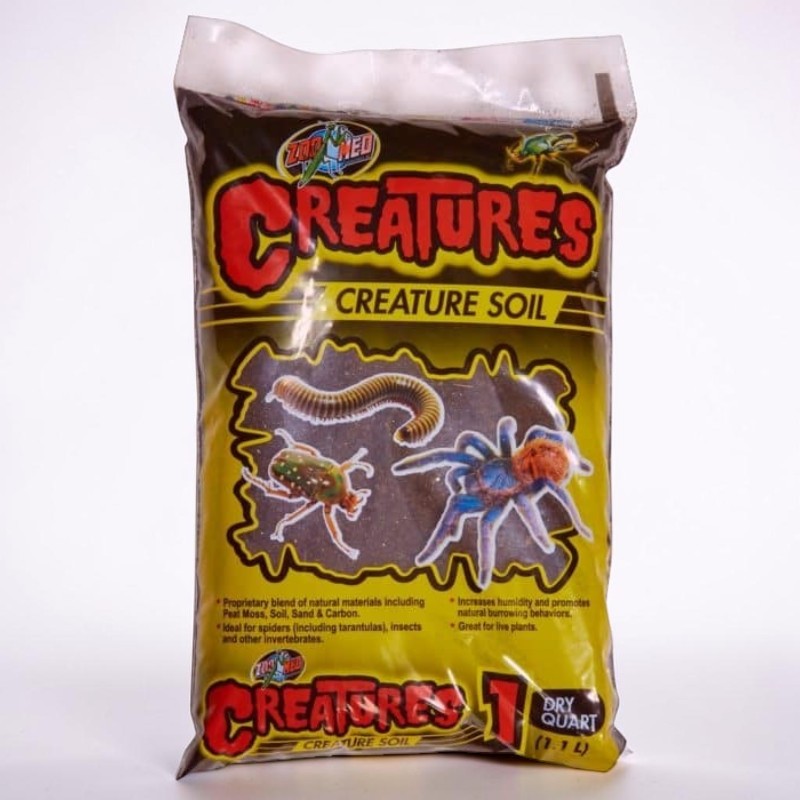
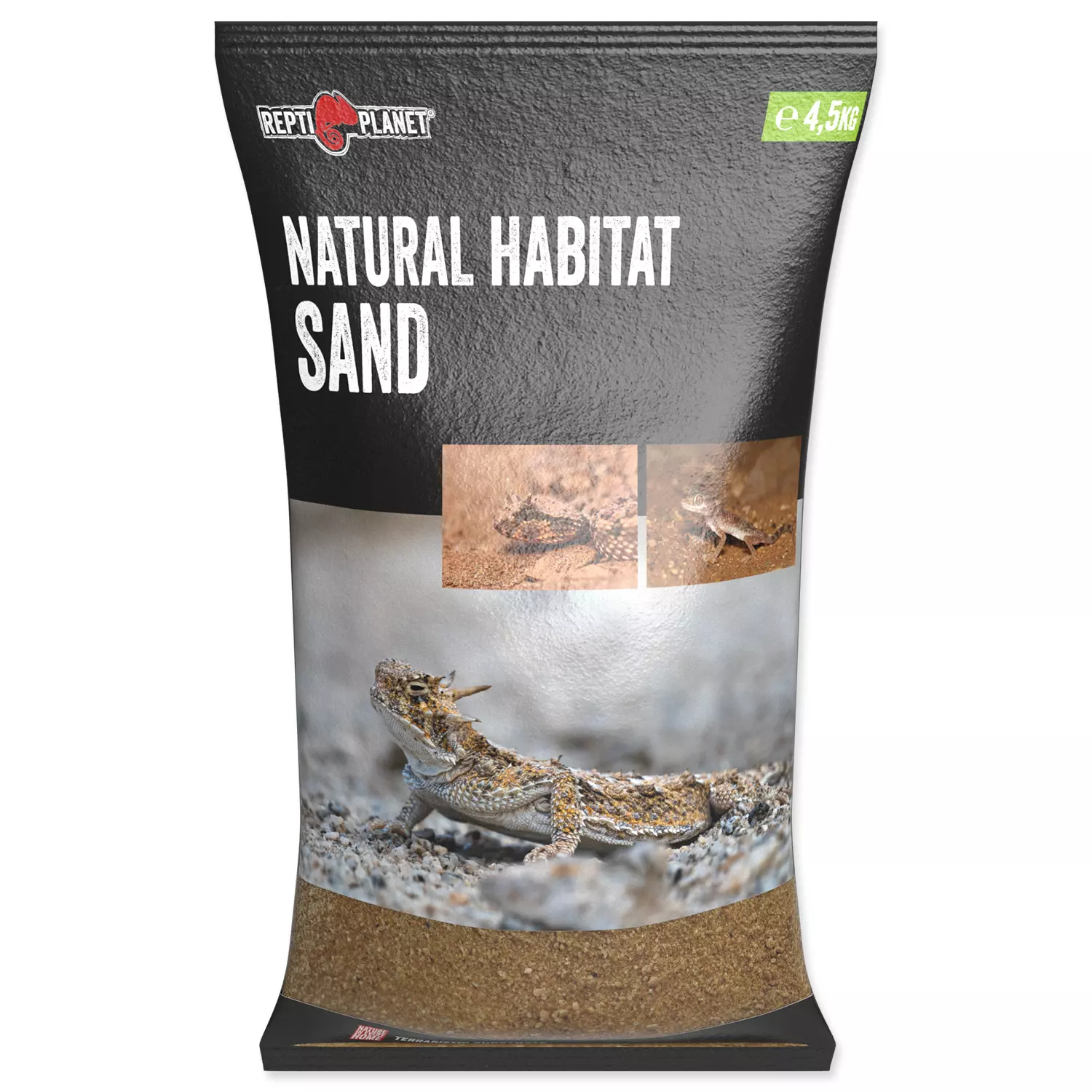
Repti Planet Natural Habitat Sand
Natural Habitat Earth by Repti PlanetA natural mixture of sand, without added dyes and chemicals. Stimulates natural behavior (burrowing, digging) of amphibians and reptiles.ReptiPlanet Natural Habitat SAND terrarium substrates create real conditions found in the desert regions of our planet. Based on the findings of previous ReptiPlanet expeditions observing reptiles and amphibians around the world, ReptiPlanet drew inspiration from the real environment to develop a unique substrate blend. Thus, ReptiPlanet has managed to define a mixture that most closely matches the natural operations of these animals. The substrate Natural Habitat SAND stimulates natural behavior (hunting, protection from predators or temperature regulation) or when laying eggs. Natural Habitat SAND substrate is ideal for breeding many species of reptiles and amphibians in our terrariums. Thanks to the mineralized substances, excellent heat conduction properties, natural origin without the addition of dyes, the natural instincts (burying, laying eggs) are encouraged. Regularly remove dirt and change the substrate accordingly often depending on the number of animals living in the terrarium.purely natural formula made of sandavailable in four colors: red, orange, black, yellowfor reptiles and amphibiansexcellent thermal propertiesweight per bag 4.5 kg.

From CHFΒ 8.50

Repti Planet Substrate Creative
Creative Substrates from Repti PlanetWith these substrates they can real landscapes creatively model and generate. A natural blend of sand and clay, without added colorants or chemicals. After drying, the resulting landscape remains solid and does not collapse. Stimulates the natural behavior of reptiles and does not limit their creativity .These substrates contain minerals that support physiological processes and are great conductors of heat. The REPTI PLANET Natural Habitat CREATIVE terrarium substrates imitate real conditions of the steppe, semi-desert and arid regions of our planet. Based on our knowledge from previous Repti Planet expeditions observing reptiles and amphibians around the world, we have taken inspiration from their real environments to create a unique blend of sand and clay that allows us to recreate the natural habitat of these reptiles. All-natural formulation of clay and sandAvailable in two colors; red and yellowFor sculpting, molding and building For reptiles and amphibiansExcellent thermal propertiesWeight per bag 4 kgUse:After adding water (ratio 4:1), you can sculpt burrows, shelters, rods, resting places and anything else you can imagine. You can combine the moldable substrate with stones, roots and other natural materials. After drying, the landscape is solid and does not collapse. To create a realistic environment, we recommend combining with other Repti Planet substrates.  Make the base dense and let it dry. The drying time depends on the ambient temperature and the amount of substrate used. Do not put reptiles and amphibians in the terrarium until the substrate is completely dry (when it is solid). Combine the substrate with roots, stones, branches and other natural materials to create a realistic environment. The CREATIVE substrate stimulates natural behavior in digging burrows, sheltering and laying eggs. RP Natural Habitat CREATIVE substrate is ideal for rearing many species of reptiles and amphibians due to the mineral substances, excellent heat conduction properties, natural origin without dyes and support of natural instincts (burrowing, laying). .

CHFΒ 7.50

Repti Planet Natural Habitat Earth
Natural Habitat Earth by Repti PlanetA natural blend of clay and sand, with no added dyes or chemicals. Stimulates the natural behavior of reptiles ( burrowing, burrowing) and has excellent thermal conductivity. Provides you with the Earth Habitat to create and shape real environments.It works well with ReptiPlanet's CREATIVE SUBSTRATES to create great terrarium setups. The completely natural terrarium substrates REPTI PLANET Natural Habitat EARTH imitate the real conditions in the steppes, grasslands, semi-deserts and mountainous regions of our planet. Based on the previous knowledge of our various expeditions in search of reptiles and amphibians around the world, we have taken inspiration from the real environment, creating a unique mixture of sand, pebbles and clay that mimics the habitat in which these reptiles and amphibians live wildly. Few reptiles live on pure substrates, so the use of EARTH optimally supports the natural behavior of digging burrows, hiding places and laying eggs. We only need to moisten the substrate and then we can immediately start forming a landscape inspired by its original natural environment. Thanks to the enrichment with mineral substances, the excellent heat-conducting properties, the natural origin without the addition of colorants, as well as the support of natural instincts (digging, building), the Natural Habitat EARTH substrate is ideal for breeding many species of reptiles and amphibians in our terrariums. Remove dirt regularly and depending on the number of animals kept, change the substrate regularly.pure natural recipe of clay and sandavailable in four colors: black, brown, red, yellowto model, shape and build for reptiles and amphibiansexcellent thermal propertiesWeight per bag 4 kg.

From CHFΒ 7.50

Coconut shred for terrariums
Coconut Fiber SubstrateCoconut Fiber Bedding for your TerrariumCoconut fiber are an optimal moisturizer and are perfect for a rainforest environment. The coconut bedding is also completely free of additional fertilizers. The bedding was also produced heat sterilized and is free of germs and fungi. The coconut fiber bedding will also expand slightly after filling and with 4.5 L bedding package, you will get about 20 L of bedding.100 % organic coconut fiberOptimal for rainforest terrariums

CHFΒ 4.20

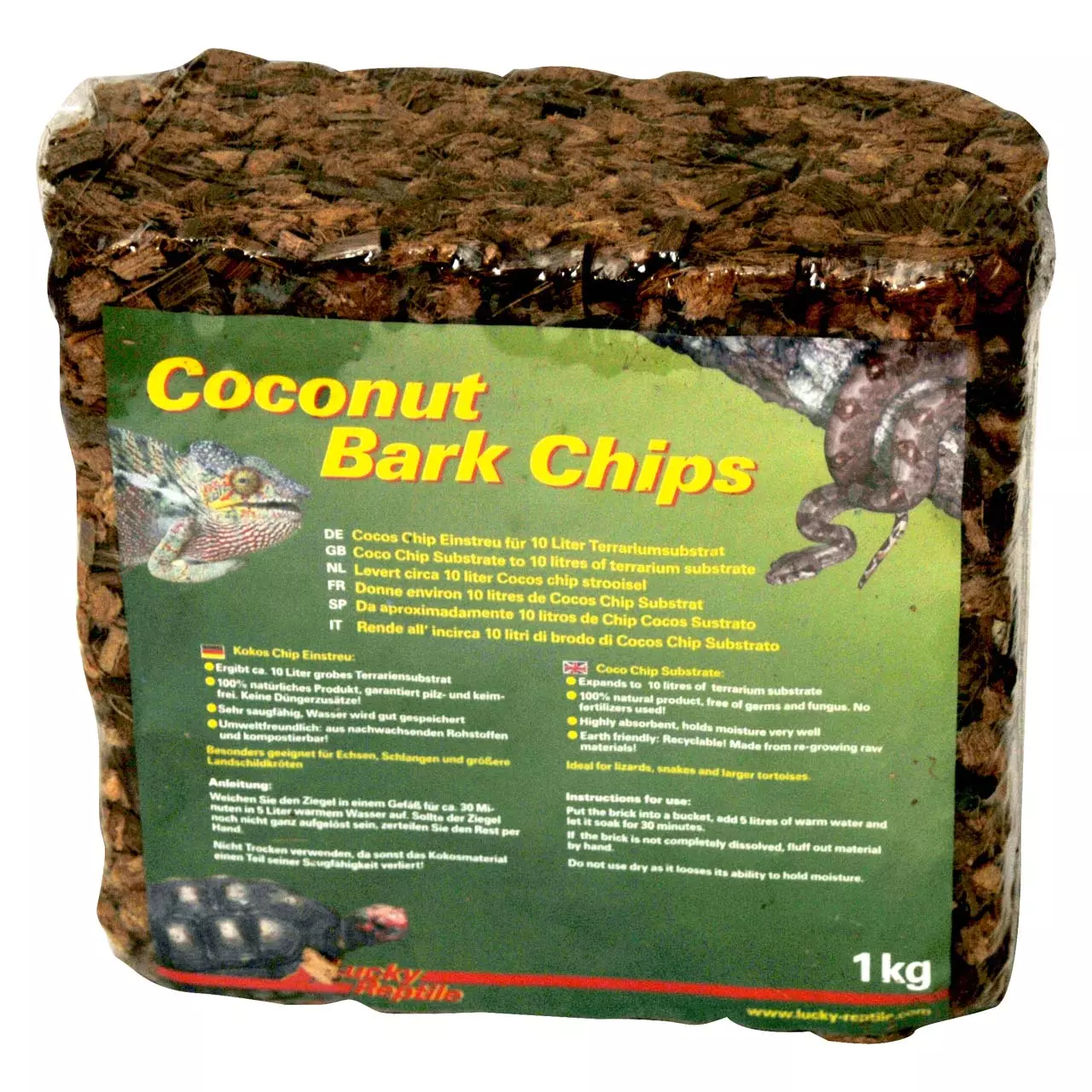
Coconut Bark Chips 1kg
Coconut Nature Chips 1 kg coconut chips compressed into a brick for your terrarium, as a soil substrate.The coconut nature chips serve as a soil substrate and also make ideal as one. The coconut chips absorb and retain moisture incredibly well, which is why you can use it perfectly for a rainforest in the terrarium. It also retains its good looks for a very long time. So the substrate does especially well for tropical snakes and lizards. 100% natural and free of chemicalsSoaks up and retains moisture perfectlyPerfect for tropical animalsMust first be soaked in water for half an hour.Under no circumstances should they use the substrate dry, otherwise the substrate loses its suction power.

CHFΒ 7.20

Terrarium moss
Terrarium moss - terrarium substrateThis tropical terrarium substrate helps to ensure that the humidity in terrariums is increased or not reduced. This terrarium substrate is also suitable as a breeding ground for plants such as orchids and is produced without chemical additives.Content 100g

CHFΒ 7.90

Vita-Sand
Color (1): orange
Vita-SandNatural calcium carbonate substrate containing vitamins as a substrate in your terrariumExtra fine substrate to prevent impaction when consumedHealth benefits due to increased calcium supply and enrichment with vitamins and beta-caroteneExcellent substrate for bearded dragons, Uromastys lizards, monitor lizards, geckos, desert tortoises and many other terrarium animals.Available in the colours: WhiteGoldOrangeContent: 4,5kgDirections for use:Pour the contents of the bag onto the terrarium floor. The depth of the Vita-Sand should be 4cm or less. If more than 4cm of sand is poured on, do not use under heaters (tank warmers or heating pad-like devices).Remove contamination as necessary with a sieve or similar. Replace all sand if an unpleasant odour develops or after 6 months.Warning:If your animals show a strong tendency to consume substrate, we recommend the following:1. check your husbandry - read a good reference book on reptile husbandry, insebsodere of your particular species, as this behaviour may be a sign of other problems.2. make sure you provide sufficient light sources with UVB for your animal.

CHFΒ 19.90

Lucky Reptile Desert Bedding Outback red
Litre : 20 liters
Lucky Reptile Desert Bedding Outback Red Desert Bedding Outback is a specially developed terrarium soil for desert and savannah terrariums. Desert Bedding 'Outback' is inspired by the red soils of Australia! Outback - Red ideal for an Australian terrarium for desert and savannah terrariums with a high clay content suitable for use with floor heaters 7 litres or 20 litres Desert Bedding is a specially developed terrarium soil for desert and savannah terrariums. In nature, very few animals live on sand, many even avoid it. Desert Bedding replicates the substrate in dry regions and has a high clay content so that the animals can create burrows as in nature. The lower regions also retain moisture, which is important as many desert reptiles, such as spiny-tailed dragons, can absorb moisture through their skin. Desert Bedding is suitable for use with floor heaters.

Variants from CHFΒ 16.50
CHFΒ 31.90

Customers also saw

Sarracenia flava var atropurpurea - carnivorous plant
Carnivorous plant - Sarracenia flava var atropurpurea supplied in an in vitro cup30-70cm highfull sunlightHumidity: 70-90%temperature: 15-25 Β°C rarely flowersSarracenia flava var. atropurpurea is a sought-after, perennial, carnivorous pitcher plant that is characterized by its upright, slender, deep red pitcher leaves with erect caps and drooping, yellow flowers. Plenty of light is required to maintain the intense red color. Size: Sarracenia flava var. atropurpurea grows up to 30-70 cm tall and 30-60 cm wide. Flowers: Flowering time: Mainly in spring and summer. Attractive, mostly white to pale pink flowers with delicate markings. Light: Full sun, requires at least 6 hours of direct sunlight per day.Substrate: A well-drained mixture often consisting of peat, perlite and sand.Feeding/fertilizing: Avoid fertilizing the substrate! The plant gets all the nutrients it needs from the prey it catches or eats.Humidity: The humidity should be between 70-90%. Temperature: Tolerates a wide range of temperatures, prefers a temperate to warm climate.Propagation: Propagates by seed, but the plant does not flower for the first 4-5 years.The combination of carnivorous plants with reptiles reptiles in a terrarium can create an aesthetically pleasing and ecologically interesting environment. Carnivorous plants such as Drosera, Nepenthes, Pinguicula and Sarracenia are not only exotic and beautiful, they also they also contribute to a balanced ecosystem by controlling the population of small insects. small insects.

CHFΒ 12.90

Pinguicula Tina - carnivorous plant
Carnivorous plant - Pinguicula Tina supplied in an in vitro cupDiameter up to 10-15 cmHumidity: 50-80%Temperature: 22-29 Β°CAttractive flowers, mostly lavender to light purplePinguicula Tina is a cross between Pinguicula agnata and Pinguicula zecheri and is also known as "Hans". It produces large, light green leaves that grow in a rosette. Although the leaves can be large, they are rather thin and can droop a little. This variety retains a consistent light green color and blooms profusely with large light purple flowers that have a darker center and distinct veins and edges.size: The diameter of the rosette can be up to 10-15 cm Flowers: Blooms in spring and summer. Delicate and attractive flowers, mostly lavender to light purple with a white or lighter throat. One flower is produced per stem.Light: Pinguicula Tina prefers bright, indirect light with occasional direct sunlight.Substrate: A well-drained mixture often consisting of peat, perlite and sand.Feeding/fertilizing: Avoid fertilizing the substrate! The plant gets all the nutrients it needs from the prey it catches or eats.Humidity: The humidity should be between 50-80%. Temperature: The ideal temperature for this plant is 22-29 Β°CPropagation: Propagation is by leaf cuttings or division.The combination of carnivorous plants with reptiles reptiles in a terrarium can create an aesthetically pleasing and ecologically interesting environment. Carnivorous plants such as Drosera, Nepenthes, Pinguicula and Sarracenia are not only exotic and beautiful, they also they also contribute to a balanced ecosystem by controlling the population of small insects. small insects.

CHFΒ 12.90

Sphagnum moss Chile
Pet Factory Chile Sphagnum Moss The perfect addition to the substrate in tropical terrariums genuine sphagnumextra soft moss to increase the humidity very durable does not mold perfect addition for the natural design of terrariums also for wetboxes 50g Genuine Sphagnum moss! Increases humidity more than conventional moss and is very durable. The moss does not mold and is a perfect addition to the substrate.

CHFΒ 13.90

MossBase powder 40g
Shroomroom MossBase 40 g - for terrariums and paludariums Moldable base for moss-covered back walls or cavesShroomroom MossBase is a natural decoration and design element in powder form (40 g), developed for creative landscapes in terrariums and paludariums. Mixed with water, it creates a mass with which you can prepare dry surfaces in a targeted manner in order to realistically design decorative moss areas. Properties and advantages Natural decorative powder for creating moss surfaces in terrariums and paludariums Is mixed with water to form a malleable mass (typically 40 g powder with approx. 80 ml water) Unique consistency for preparing dry surfaces for moss growth Ideal as a base for the targeted placement of moss spores and plant seeds Perfect for creating moss-covered backgrounds or nature-like landscapesIf you want to create natural scenes in your terrarium or paludarium with moss areas, overgrown back walls or detailed transitions, Shroomroom MossBase is a well thought-out design aid. The product is supplied as a powder and is mixed with water to form a malleable mass. A typical mixture is 40 g powder to around 80 ml water, which creates a consistency that is easy to model. The mixed mixture is suitable for preparing dry surfaces so that mosses adhere better later and can be integrated decoratively. MossBase is particularly exciting in combination with Shroomroom MossMix: as a base, it helps you to fix moss, fern or spore material specifically to the desired substrate in order to achieve lasting, convincing, nature-like looks. Important for correct application: Shroomroom MossBase is a purely decorative design element. It is not a substrate for plant growth, a fertilizer or a growth promoter. You use the product exactly where it has its strengths: in detailed, near-natural terrarium and paludarium design. Zoo Roco tip Apply MossBase in thin layers and create soft transitions so that the surface looks natural later on. Preferably place moss areas in zones where your setup offers the right microclimate. For particularly realistic results, many terrarium builders work with a base of MossBase and then apply MossMix in precise areas instead of covering the entire surface.Customers searched for: MossBase, Shroomroom MossBase, moss back wall terrarium, moss surface modeling, paludarium moss wall, terrascaping moss, attach moss to terrarium, MossMix, moss-covered background

CHFΒ 17.90

Wabi-Kusa Bubble Cup four
Bubble Cup fourWabi-Kusa describes in principle a small plant ball, which is planted in a container . The Bubble Cup four is a shapely glass in which you can create and maintain your own little plant world. Thus, entire mini landscapes can be created - there are no limits to your creativity!The planted glass can be placed in the home or at work and decorate any place, with a bit of nature. You can basically choose two types: either choose a planting with terrarium plants - that is, a mini dry terrarium or choose plants from aquaristics (more common form). In this case, it is easiest to choose plants that also grow in the emersed form (i.e. above water). Aquaristic plants that grow emers often bloom differently than they do submersed. In-vitro plants are best suited for planting in a Wabi-Kusa jar. It is also possible to grow submerged plants in a Wabi-Kusa, but this requires some practice.To ensure natural circulation of moisture, there is a condensate drain in the jar to ensure that moisture is not lost as quickly.  The jars come with a form-fitting lid, to ensure normal air exchange, a small hole has been drilled at the top of the side.Designed plant jar for Wabi-Kusa culturesMinimalist cool designBring you a piece of nature in any room. Easy to maintainSize: Ø 155 mm / Height 115 mm / Thickness glass 3mm

CHFΒ 19.90

Pinguicula Moranensis carow - carnivorous plant
Carnivorous plant - Pinguicula Moranensis carow supplied in an in-vitro cupDiameter up to 5.5 cmHumidity: 50-80 %Temperature: 22-29 Β°CAttractive plant, with fleshy leavesPinguicula 'Moranensis carow' is an exceptional plant that attracts attention with its unique appearance.Color and size:The mature plant reaches a diameter of 5.5 cm or more. The color of the leaves can vary from light green to pink depending on the light intensity.Light: The plant prefers partial to full sun or the equivalent of grow light, 16 hours of light per day.Substrate:A well-drained mix often consisting of peat, perlite and sand.Feeding: Spray with TropicalRain to meet nutrient requirements. Feeding with insects is not recommended.Humidity: The ideal humidity is between 50 % and 80 % with sufficient air circulation. Provide sufficient distilled water during the insect-feeding phase to keep the medium moist. Reduce watering and allow the medium to dry out regularly. When the succulent rosette begins to form, use Tropical Rain for watering.Temperature: The plant grows well at temperatures between 22Β°C and 29Β°C.Winter dormancy: Technically none, but the insect-like leaves are replaced by a smaller succulent rosette for part of the year. If the temperature or humidity is too low, the plant may stop growing. The combination of carnivorous plants with reptiles reptiles in a terrarium can create an aesthetically pleasing and ecologically interesting environment. Carnivorous plants such as Drosera, Nepenthes, Pinguicula and Sarracenia are not only exotic and beautiful, but they also contribute to a balanced ecosystem by controlling the population of small insects. small insects.

CHFΒ 12.90

Coconut Bark Chips 1kg
Coconut Nature Chips 1 kg coconut chips compressed into a brick for your terrarium, as a soil substrate.The coconut nature chips serve as a soil substrate and also make ideal as one. The coconut chips absorb and retain moisture incredibly well, which is why you can use it perfectly for a rainforest in the terrarium. It also retains its good looks for a very long time. So the substrate does especially well for tropical snakes and lizards. 100% natural and free of chemicalsSoaks up and retains moisture perfectlyPerfect for tropical animalsMust first be soaked in water for half an hour.Under no circumstances should they use the substrate dry, otherwise the substrate loses its suction power.

CHFΒ 7.20